rotorman
-
Posts
267 -
Joined
-
Last visited
Content Type
Profiles
Forums
Blogs
Gallery
Downloads
Events
Store
Everything posted by rotorman
-
Slightly different on the 650. But I did find the option. Thanks for posting. Nick
-
If I load an the incorrect approach at my flight planned destination I can't figure out a way to remove it without deleting the entire flight plane. Is there another way?
-
One last follow up to this problem. To review, when I the nose wheel was turned to near max left or right, the corresponding brake would pressurize and lock that main wheel. I started to notice that I had a pronounced vibration during takeoff and landing rolls. I speculated I had an out of round tire. I jacked the offending side and found I had a large flat spot on that tire. I am speculating that before I fixed the above problem, I made a crosswind landing that that resulted in significant application of pedal and the tire touched down with the brake applied.
-
To answer Corusoam's question, there are no marks on the elevator. But since it has a sharp edge, I wouldn't expected that the light contact that occurred would produce any marks on the elevator. I do recall that either on the pre-buy (1994) inspection or during an annual shortly thereafter, some corrosion was found on a rod. It was cleaned and repainted. I'll check the logs. I will also perform the check Skip suggests. Clarence, can I visually inspect that the travel stops? Nick
-
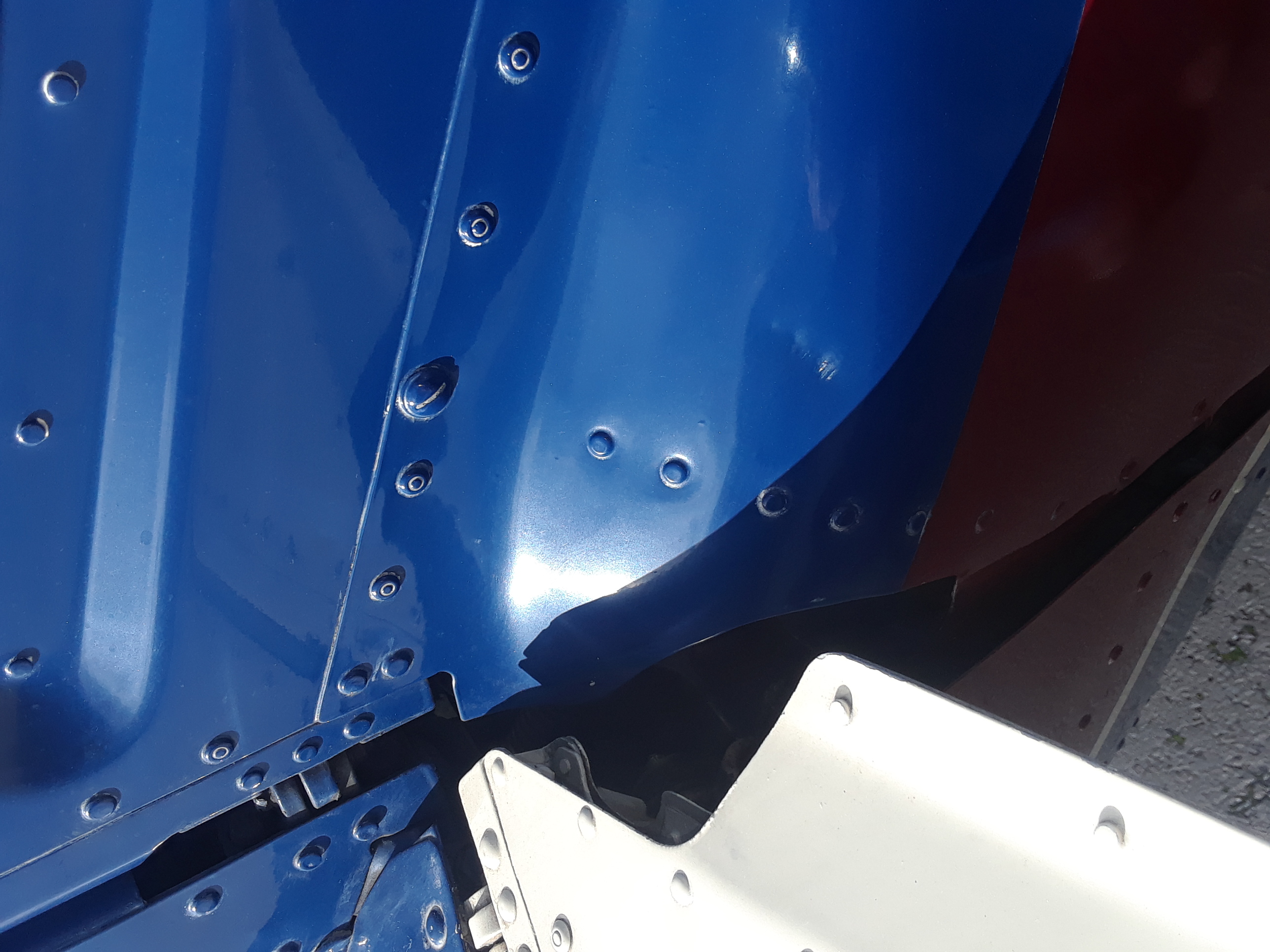
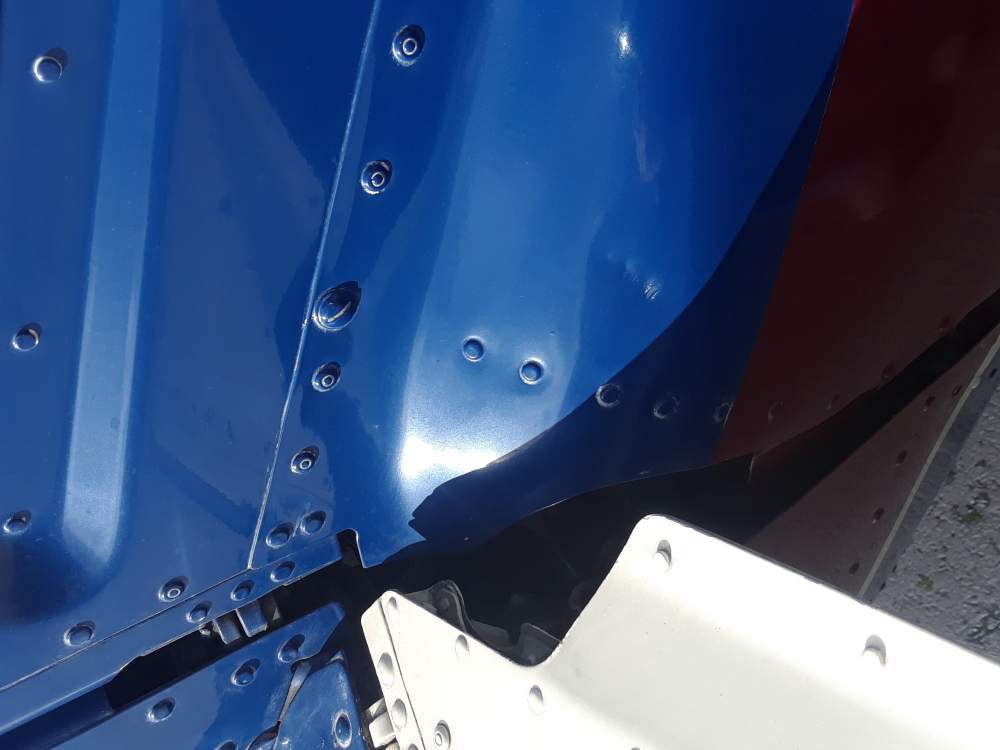
These Mark's are located on both sides of the vertical vertical stab 3 rivets down. It looks as though there was contact between the horizontal and vertical stab. Is that possible? The Mark's were there when I bought the plane. Always wondered about them but never asked.

-
The stick with same company advice I have heard before and have headed for many years. Also, I'm with Global so this is all good news. Thanks for the replys.
-
Several years down the road for me to 80. But planning ahead. I've sunk a ton of money recently into my Mooney which I bought in 1994. I'm currently unhappy with how my KFC 200 is performing while attempting to follow the GTN 650's commands. The autopilot computer was bench checked recently and deemed to be operating correctly. The system preflight tests correctly. But on a recent practice RNAV approach the Glide slope command bars happily were taking me to ground well short of the runway. AP disconnects are a frequent occurrence. There are other problems as well. Consequently, my confidence level has sunk to a new low. But I digress. I don't want to sink more money into the airplane unless I'm assured I can continue to insure it long into the future.
-
Anyone know an over 80 years old pilot who still has insurance on his Mooney? I've heard that's kind of the cut off.
-
I pushed quote and your quote came up in the above box. I deleted the words but I can't delete the quote box.
-
This is probably obvious to everyone else, but I can't figure out how to delete an unsent post. Once I start a reply with a quote and want to quit, I can't delete it the quote. Even I leave MS it is there when I come back. Nick
-
For those of us who are using the Android version of Garmin Pilot, the poor cousins as it were, here is Garmin's explanation for the getting error codes and not being able to file a flight plan. Good afternoon Nicholas, "Are you by chance using Garmin Pilot on the Android platform? Unfortunately, for the Android platform, this is an issue on Android devices that our developers are working diligently to correct. Thank you for contacting Garmin International. Best Regards, Chris Garmin Aviation Support" The problem starts when an R is entered in Com/Nav. If an R is not entered the app will automatically enter it if anything is entered in PBN. Then, when filing, the app puts up this error. "Error(s) during filing request. PBN/data must be included in Other Information field when "R" is in the Aircraft Equipment field". This instruction can not be satisfied. Entering data in the Other Information field does not clear the error. In order to file, the PBN category must be cleared and the R removed from Com/Nav, in that order. The really annoying part of this is that I spoke to 3 customer service reps and not one of them told me this is a know problem they are working on. An email finally brought the answer but only aft I squander hours trying to make the thing work. The casualness of the above reply makes it double annoying. This was their response an hour after I wrote saying I wanted compensation for the inconvience. A bit more consiliotory than the initial response. "Nicholas, Your subscription has been extended 6 months as we work through this android issue. We apologize for the inconvenience. Best Regards, Collin Garmin Aviation Support""
-
I have a GTN650, KN53 w/gs and GTX345. You must be using Foreflight. Do you have a category called OTHER INFORMATION? That's where the GTX 345 code goes. Mine is A3EB4D. I used your codes minus the "D" and Garmin accepts them. I have a GTN650, KN53 w/gs and GTX345. Nick
-
I have been using Garmin P for a long time. Recently I managed to delete my airplane from the app so I had to reenter it it. I watched the Garmin video on how set up the equipment codes and followed it since my airplane is equipped similar their example. However, when I tried to file a IFR flight plan it produced an error stating incorrect equipment codes. I could not clear it. Three phone calls to Garmin and several hours of trying different combinations would not clear it. Even reinstalling the app got me nowhere. I then came across an instruction for Foreflight which gave me a combination four entries as opposed the 10 or 15 Garmin was advising. The video said you can get fancier but this simple combinations will be accepted by the filing service and the app. That solved the immediate problem of not being able to file. Garmin recommended codes: (Could not file IFR flight plan with the below codes) FAA/Domestic: G, ICAO Com/Nav: SBDGRZ, ICAO Surveillance: LB2U2, ICAO PBN: A1B2D202S1, Other: NAV/ SBAS, SURV/ 260B 262B, CODE/ xxxxxx (aircraft specific) Foreflight recommended codes: (Successfully filed Flight plan off airways using direct to waypoints with below codes) FAA/Domestic: G, IACO Com/Nav: SG, ICAO Surveillance: C The Garmin code list is exhaustive including the mode S code in the FAA aircraft registry. My question is, are all those codes really necessary? Does the FAA require them all? Will I go to jail if I make a mistake
-
How does one grease this part? It looks like the tube goes into an adapter or is that the bearing? Do you just smear grease on it?
-

IO360-A1B6D Square tip prop vs IO360-A3B6D Round tip prop
rotorman replied to John Mininger's topic in General Mooney Talk
Skip, do you know the SB number? -
The trainer will not active the approach. But I seem to have mixed results when I try it on the airplane. I can't really figure out what criteria is absent when it does not load automatically.
-
If I have a flight plan loaded with the last waypoint before the destination airport being the FAF, and prior to reaching the FAF I load the approach, will the GTN automatically activate the approach upon reaching the FAF or do I have to do that manually?
-
Mine was not zip-tied to the filler neck so upon each use I would feel around that area and come up with it. Better if it is fixed to the neck.
-
It was my assumption that all parts installed on certified aircraft have to be FAA approved. If not where is the cut off? All nuts, bolts and washer can be standard parts. Does that hold for all switches, some switches, or no switches. The bottom line is if a person wants to know if a part is approved it is very difficult to ascertain If no paperwork is included. Buying from a reputable supplier is clearly the best way to protect one's self. But asking him if the part is approved is not positive proof. Bogus parts are all over in the aircraft industry. In the examples above. What is the difference between a V31-1NS vs V3-19? One has screws and one doesn't? Approved or not Approved? I would go for the $36 Lasar switch.
-
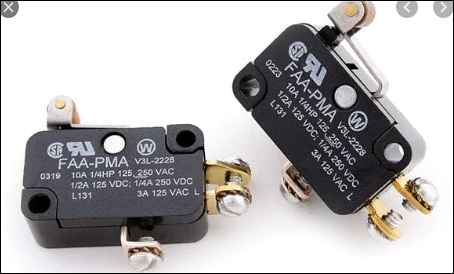
The IPC shows V3L-3. There is only one site I could find with this part that has 3 cap screw connections. It sells for $85. It is a V3L-2282 although the website says it is also a V3L-3. https://www.mouser.com/ProductDetail/Honeywell/V3L-3?qs=JT4vHv%2B%2Bx3RbPn2gKwjHYg%3D%3D My part number is SS12ET10-102L3. This switch is similar but with no FAA-PMA. Also, the above switch looks to be in two parts and possibly disassemblable. The switch I received is one piece. The logo on my switch is the same logo as above, ЯU. On the other side it says Mexico and C-H. I can find my part number online all over the place and it sells for about $16. No mention however of FAA-PMA. https://www.newark.com/eaton/ss12et10-102l3/s-a-swt-high-cap-screw/dp/94C6748 This is a website showing that Mooney is the manufacturer of this part number but no photo of the part. https://www.simplifiedpurchasing.com/partno-search?searchby=partno&searchkey=SS12ET10-102L3 The quality of the part is what started me wondering. Maybe I'm just being picky.
-
I recently acquired a limit switch for my flaps from a reputable aviation parts supplier. There is nothing on the switch or the paperwork that came with it to show that it is an FAA approved part. Shouldn't that information be included?
-
What is difference between IO360-A3B6D and IO360-A3B6?
rotorman replied to bcwiseguy's topic in General Mooney Talk
In the 1990's, I flew a 1978 M20J for a short time. The owner decided that he wanted to fly the airplane from Connecticut across the Atlantic via Greenland and back. So he installed a extra fuel tank and completed his adventure. Shortly after, it was time for him to inspect is D3000 mag. He found that the common gear that drives both mags had a missing tooth. The gear is made of some kind of plastic or nylon not metal. I made the conversion to A3B6 when overhaul time came. -
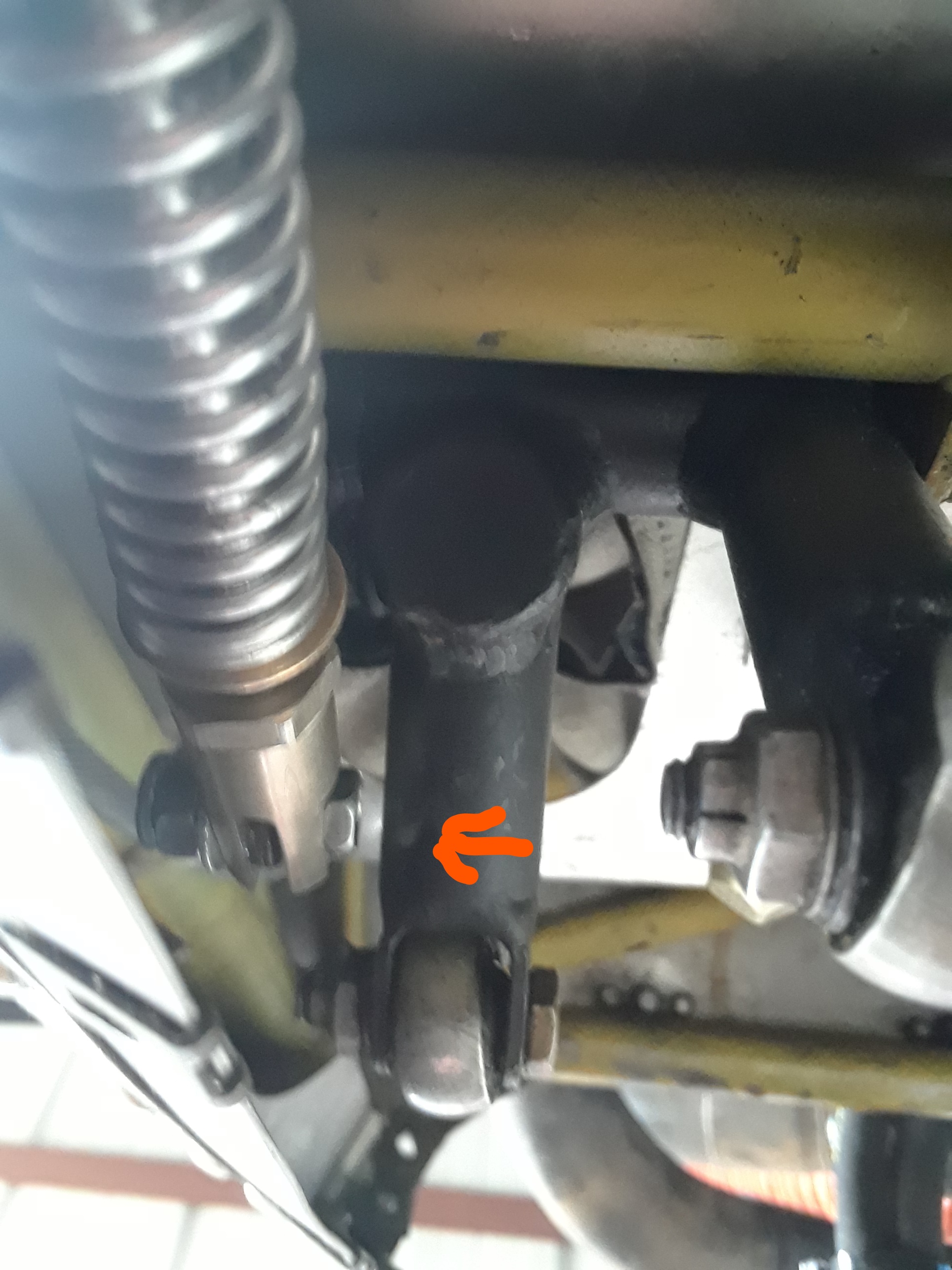
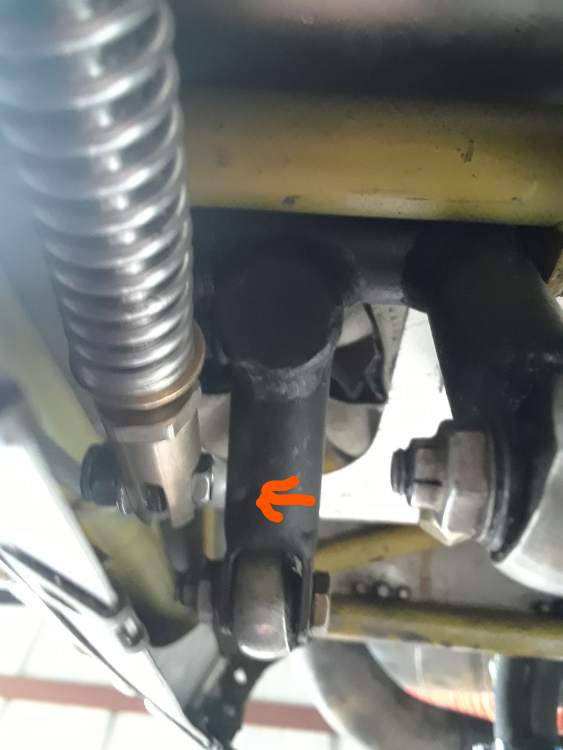
Looking at Skip's photo starting at the top/left which is the forward/left side of the airplane. The condition is full right pedal and nosewheel full right. The black bell crank with the bolt and castellated nut, through other linkages, drives the nosewheel and rudder. That bolt/nut is currently forward of the brake master rod end. At the bottom of the picture the condition is the opposite. Full left pedal has been applied and the bell crank has been pushed aft and passed the brake master rod end without interference. In my case there was interference and it nudged the brake rod aft enough to pressurize the master and apply the left brake. The contact came as a result of the master cylinder installer, instead of using a pin in the master rod end as in Skip's picture, used a bolt and a castellated nut which protruded enough to push the rod slight aft applying enough pressure to activate the left brake. The amount of movement was surprising small but apparently enough. As I said earlier I have very little free play in my brake pedals. The lousy picture shows my left side fix. A tiny witness mark can be seen on the black bell crank. The right side also had interference but not as much. My fix was to remove the existing nuts and bolts and install a shorter bolts with a lock nuts. As soon as I can acquire the correct pins I will install them. Clarences diagram and Skip's photo were invaluable to me in understanding how this system works and to solve this mystery. A great lesson and a good outcome. Thanks.
-
Skip, Just going out the door. I'll check that pivot point at bolt 8 before going further.
-
I have opened the panel and my installation is slightly different from yours. I should have taken a picture but I was short on time last night so I just wanted to get an initial look. Were your piston rod joins the bell-crank I have an additional threaded fitting pinned to the bell-crank that allows piston rod length adjustment. A quick look seemed to indicate that I can change the effective length of piston rod such that it would not affect the pedal position. But the question is, does the spring push the rod to a mechanical full release stop inside the piston? In other words. If the rod were unattached at the bell-crank end would the piston rod be pushed further out of the piston thereby introducing more free-play before the pressure increased to active the brake? I plan to return today with the proper tools to change the rod length. There does not seem to be any other way I can introduce more free-play into the system. Everything else looks normal.