
Hank
-
Posts
20,309 -
Joined
-
Last visited
-
Days Won
126
Content Type
Profiles
Forums
Blogs
Gallery
Downloads
Events
Store
Everything posted by Hank
-
Pulling the prop back is done solely for extending your glide range to reach a suitable landing site when the engine is no longer running. If the engine is seized, or has a hole knocked in the case or otherwise out of oil, it will obviously not help.
-
Right there in my Owners Manual: Note that it says "briskly apply full rudder" and "rapid forward movement" of the yoke. I remember reading from a Mooney instructor who tried a leisurely, Cessna-type recovery and scared himself before using rapid control movements to their limits, resulting in an initially slow recovery, losing several thousand feet in the process. See the NOTE that a one-turning spin and recovery may lose 2000 feet of altitude, plus any additional altitude loss due to confusion, slow reactions or less-than-brisk control movements . . . . Ya'll be careful out there! P.S--reading the list, it looks like P & A R E forward WAIT E and later Power to recover from the (steep) dive.
.jpg.1b557a0628316efc1eefb1e5ce5a4381.jpg)
-
The DPE on my IFR checkride wanted to see an accelerated departure stall. We did reduced throttle, 23", somewhere around 1500-2000 msl He told me at couple of times, "don't recover yet," but was happy when I did so at the bubble. Then the sweat began to dry on my back and the left side of my face. The rest of the ride was much lower stress!
-
When I descend, I just push the yoke for 500 fpm and trim to hold it there. Then as I come down, I occasionally pull back MP and advance Mixture to maintain my previous cruise values for MP & EGT. The prop isn't adjusted unless ATC levels me off or I start an approach whichnare lower RPM, until it's time for pattern entry when it goes forward.
-
Hmmm . . . Mooney spin training with capable CFI support? I dunno . . . .


-
Sure. Don't you occasionally practice engine out landings? Once the throttle is at idle, pulling back the prop actually reduces how much the prop is driving the engine
-

EarthX Batteries STC Approval for 150+ 12V Aircraft
Hank replied to EarthX Inc's topic in Miscellaneous Aviation Talk
I thought that dollar swap for useful load increase was standard practice? Just be aware that the weight decrease won't be enough to claim a speed increase! -
It's not in my Owners Manual, either. But it has been mentioned by several CFI / CFII who've flown with me. Try it, you'll be surprised by its effectiveness. My first Mooney instructor briefed me while practicing descending to pattern altitude that pushing the prop forward, my 3-blade Hartzell makes a great speed brake; similarly, pulling the prop back is like taking your foot off of the brakes.
-
There are some near us, too. That ground roll looked like twice mine just to rotate, then another takeoff length to break ground. But they are definitely moving faster than my little Mooney!
-
@bradcarr, I move the prop lever during engine runup prior to takeoff, then back to Max, where it stays until I level off. At your altitudes, I run 2500, which is about an inch back. At lower altitudes, I will cruise at 2300 or 2400; I fly many approaches at 2300 due to low altitudes. Looks like this at 2500:

-
Pre-Covid, I had new windlace installed on my baggage door while i waited, $100 total. Plus the lunch I went to while he worked. 2018? 2019?
-
This thread title is click bait! My first thought was "that sounds like a personal problem." There's something to be said for grabbing your rod and shaking it . . . .
-
EarthX Batteries STC Approval for 150+ 12V Aircraft
Hank replied to EarthX Inc's topic in Miscellaneous Aviation Talk
Sadly, there's no space for a 2nd battery on my firewall. Getting the top plug wires to the left cylinders is already tough, and there's less than 1/2" horizontal clearance when I unscrew my oil filter. My first electrical failure was from a blown circuit board on the panel light dimmer, everything shut down. I flew home below the clouds that I had just descended out of on a nearby VOR-A approach. The second time my alternator field wire broke, and the radios stopped transmitting when I tried to ask for lower about 14 minutes from the field. There was additional flying time as I finished my late-started descent and hand-cranked the gear down. -
I have only two lights to turn on. The landing light is always on (I literally never flip the switch since installing the LED), and now ADS-B Out requires my Nav Lights to be on. So I write down my clearances, which also makes a handy reference.
-
EarthX Batteries STC Approval for 150+ 12V Aircraft
Hank replied to EarthX Inc's topic in Miscellaneous Aviation Talk
Like many, I use the RG-35-AXC, a little heavier with more capacity. Do you have one that compares favorably? I should have three more years' life in my Concorde, so your not being approved yet isn't a problem. EDIT--just saw your follow up post. I'm wary of halving capacity, I've had two (2) electrical failures in the air. -
EarthX Batteries STC Approval for 150+ 12V Aircraft
Hank replied to EarthX Inc's topic in Miscellaneous Aviation Talk
I'll see what happens to CG with battery on the firewall, it should offset some of my 3-blade prop. Then again, need to review the performance specs--how long will it run my plane when the alternator craps out? And the big bugaboo, price. Concorde has gone up significantly the last few years, but what about a 12V EarthX? -
EarthX Batteries STC Approval for 150+ 12V Aircraft
Hank replied to EarthX Inc's topic in Miscellaneous Aviation Talk
@EarthX Inc? -
I write the approach I'm given, and Cleared to Land, on the notepad error that I record frequency changes, route and reroutes on. Easy. Simple. The Pre-Landing Checklist is silkscreened and illuminated on my panel, by the factory. Easier. Simplest. Right below the gear switch. I'm a big fan of the KISS principle, just not the band.
-
My guess is that it was unclear enough that few were willing to pony up . . . The funds were held in a non-interest-bearing account!
-
Thermo was easy. An awful lot of it boils down to Then again, I'm an ME with a Master's Degree.

-
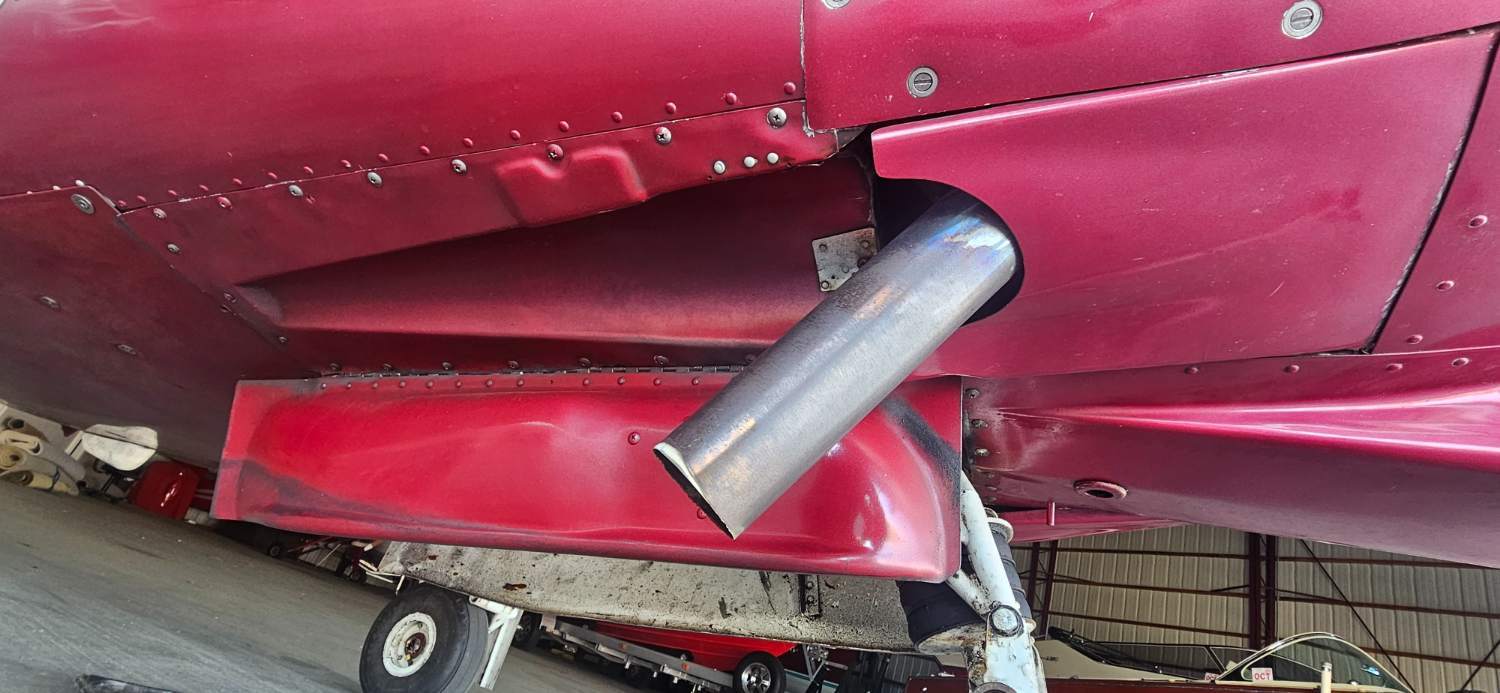
Mine was replaced a few years ago, memory says the old one was shorter.
-
From Kmart??? Sure it is! But the washcloths are thinner and lighter weight.
-
Carb heat and airbox question? Is this normal?
Hank replied to Utah20Gflyer's topic in Vintage Mooneys (pre-J models)
Be happy! One of the ears broke off of my flapper, and it would default to Full Carb Heat at about 100-200agl. The first time was a surprise--slow climb, slow cruise, and no idea what was happening. Had to apologize to Atlanta Center when they asked if I was really a Mooney. My new IA (I had just relocated 600 miles) was able to.weld on a blob and file a new ear out of it. As a bad welder myself, I recognized his appalling job, but I've never welded sheet metal (I've usually welded > 1/8' thickness). Good luck with your repair. If you haven't noticed a loss of speed and climb, you're not flying around with a whole lot of Carb Heat on. -
I buy bulk packs of plain white terry cloth washcloths and hand towels just for this. Washcloths for the windshield, or for scrubbing, and the hand towels for wash wax all. Used to get them at Kmart, now have upgraded to Walmart, Sam's or wherever i see them.
-
Sorry to hear about this! It may depend upon what year the E is, because sometime in the 60s, elevator and rudder deflections changed. Also, around 1965-66, the length of the rudder changed--older rudder stopped at the horizontal stabilizer, later rudder go all the way to the bottom.