AndreiC
-
Posts
503 -
Joined
-
Last visited
-
Days Won
2
Content Type
Profiles
Forums
Blogs
Gallery
Downloads
Events
Store
Everything posted by AndreiC
-
Thanks, Dev. I spoke to the folks at LASAR and decided to try to install the flap gap seals (at least) at my next annual. (At the moment they are trying to get things squared away with the FAA after their move to Oregon, and are not selling any of the kits; but they should be available in a month or so.) The other two kits they recommended were the dorsal fin vertical seal and the wing root fairing. Anyone have any experience if these two do anything to improve speed?
-
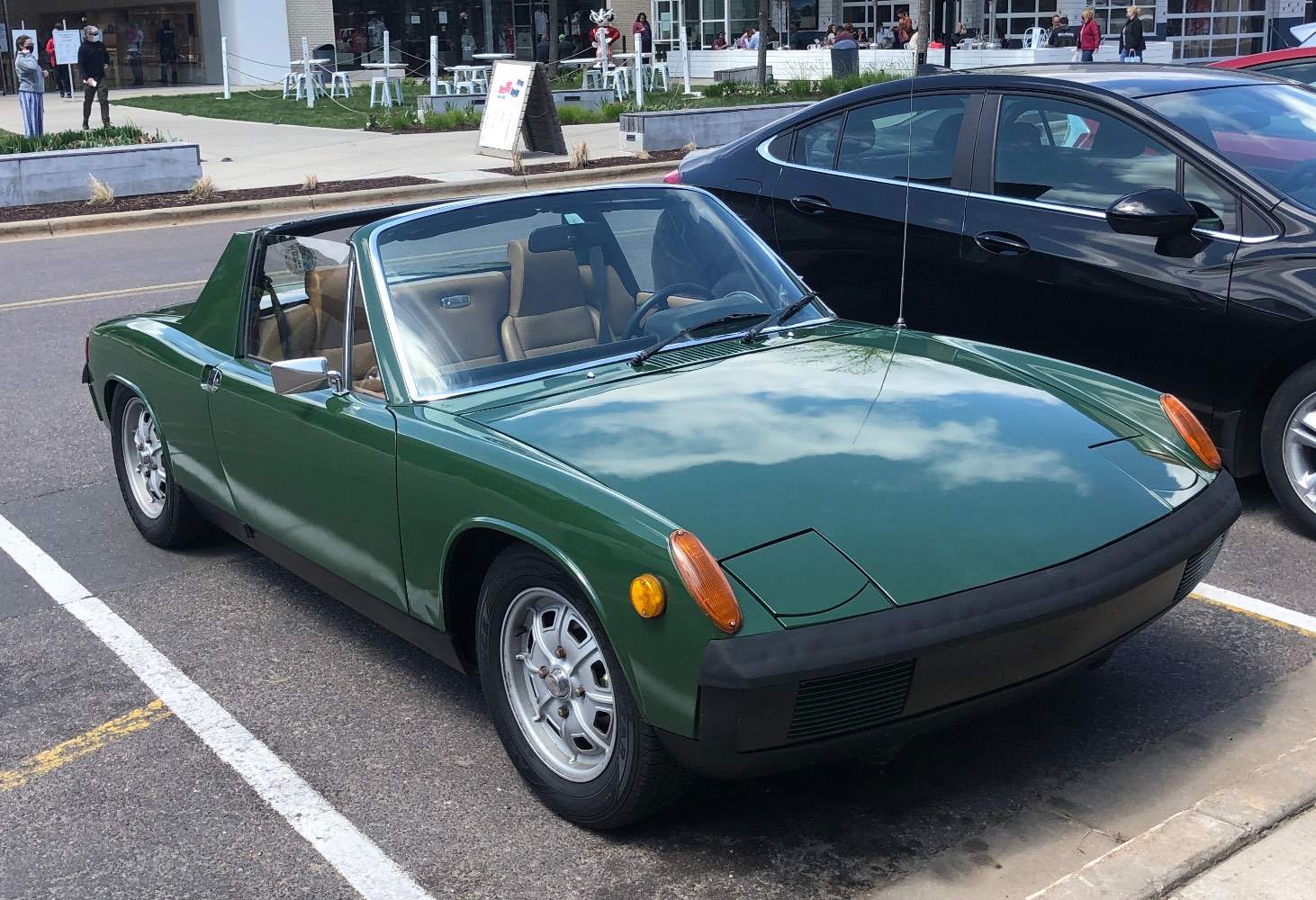
Maybe as the OP I will add that whoever guessed Porsche 914 has my vote. That is my fun car Here is a pic of it. Born same year and month as myself. (That is the Porsche for CB's, 1/4 of the price of a 911...)
-
@ArtVandelay this is like one of those pictures where you don't notice a guy with half a mustache because of a good looking girl in the foreground... took me 5 minutes to understand what you were talking about. I honestly thought my previous Cherokee was the Honda Civic of airplanes...
-
One other quick question. Is there any mod that would replace the infinite number of round head exposed screws on the underside of the wings and/or around the windshield with something flatter and less exposed? Would that make a difference?
-
I know it's stupid. I did all the calculations, and on my longest flights I would save like 15-20 minutes. No idea why this is obsessing me, but it does -- I want to see those book numbers of 155kts or so at 10000 feet.
-
What does the LASAR cowl closure look like? I may have that one already, is it the one that closes the guppy mouth half way, at the bottom? I'll call LASAR to ask about the flap gap seals. What else did you have on your bird @Fritz1?
-
I have had my 1970 M20E for three years now, and it fits my mission profile perfectly; I never fly with more that one adult, so I don't need a medium body. The avionics are pretty much where I want them to be. Only thing bugging me is the speed (or lack thereof). A lot of testing leads me to conclude that the currently configured airplane gets about 143 kts cruise LOP (9.3 gph) and around 148 kts if I push it ROP (10.5-11 gph). These are the best speeds I could get out of her at altitudes of around 7500-9500, 2500 rpm. I would like to hear the forum's opinion on how I could get her to be faster if I were to throw some money at the problem, maybe $15k tops. More specifically, my question is what would be the best bang for the buck to get more speed. First question: is this a fool's errand? My plane, as it is, is worth about $80k. Would I be better off just biting the bullet -- selling it and spending another $40-50k to enter J territory? Here are things I considered that could potentially gain me more speed. a) Switch to a Hartzell scimitar 2-blade prop from the current 3-blade McCauley. This is expensive -- probably around $10k, and I would only do it if I were sure to see a significant improvement in speed. b) Install some STC-ed speed mods, like maybe the sloped windshield or one of the J-like cowls. Are any of these still sold? How much do they cost, and how much labor is involved in installing them? How much speed is gained? c) Any other low hanging fruit? My mechanic used the travel boards and checked the rigging at the last annual; I had the plane washed and waxed recently; I tried flying with weight in the back. None of these made much difference as far as I can tell. Thanks in advance!
-
I tried comparing this plane in my head with the 1970 E I bought 3 years ago from Jimmy for $85k. I figure overall mine was about $6k more expensive, but indeed the difference is not as great as I thought. So maybe prices have gone down 6-8% in the last three years, but this could be more of a rounding error or not checking the log books of the above plane carefully (for example, I don't know when the landing shock disks were replaced; and I did not check if the prop on the above plane is the no-AD one). Here is the comparison. Mine was $85k. On the negative side for mine, the paint is serviceable, but definitely worse than on the plane from Indy: -$7k. Interior was about the same (bad). Mine has no speed mods, a 3-blade prop, and the slower wing made in the 1970s: $-$5k (maybe more). On the plus side, mine has a 430w, an STEC 30 autopilot, and ADS-B out: $+12k. J-model yokes: +$1k. 1000 hours less on the engine: +$25k. Electric gear with later model actuator and relatively new no-back spring: $3k. So about $6k difference after all the pluses and minuses.
-
It has only flown 120 hours in the last 10 years, 20 in the last 3 years. Not exactly purely sitting, but not flown much. Still, in MN I would be ok with this plane, probably no corrosion and with the cam already coated from 1400 hours of use, likely not corroded either. If this plane had come up when I bought my E for twice as much, I would have jumped at the opportunity.
-
Just in terms of funny comparisons. At some point I was talking to a friend from Germany who flies gliders, and the first thing he asked was what was the glide ratio of the Cherokee I owned at the time. When I told him his reaction was “what are you flying, an upright piano?”
-
As a fellow Cherokee-to-short body Mooney, take your time with an instructor to perfect your landings. After 15+ years in the Cherokee, it took me several months to get used to the short throw of the controls on the M. It also really helps to say to yourself “pull on the yoke, pull on the yoke” as long as the nosewheel is up; don’t let it slam down.
-
how to start without an electric fuel pump
AndreiC replied to bdavis3223's topic in Vintage Mooneys (pre-J models)
Taking out the pump is not difficult. Takes about an hour, it is under the pilot legs, just behind the cowling. I had mine sent to Aero Motors and they had it back to me in under a week. I installed it back under the watchful eyes of an A&P/IA who was kind enough to come to my airport and look at the work and sign it off. (We don't have a regular mechanic at my field.) Whole thing was a non-issue. -
I normally see 18.5 gph on takeoff in my E (same engine). My field is at 1000 ft MSL.
-
Are you asking if the fuel flow to individual cylinders can be adjusted from the servo (and that yours may be set too low on #2)? Or are you asking about the overall fuel flow? I don't think individual ones can be changed in the servo; but changing injectors may?? I am not sure.
-
Does your JPI have fuel flow? My JPI-700 shows me fuel flow in gph, that is what I would be looking at. I usually see 18.5 gph right after takeoff, and it slowly goes down as I climb, even if I do not play with the mixture knob. As I pass 5000 feet or so I start to lean, trying to keep my EGTs around 1250-1275. I was under the impression that the amount of fuel flow is a servo setting (not directly user accessible) which can be modified by a competent mechanic in the field.
-
Very interested in this topic. I also have a cylinder that runs much hotter than the others (by about 50 degrees), but mine is at a much lower temperature altogether (295-315 for cylinders #1, #3, and #4, 360-365 cylinder #2). Which of your cylinders peaks last when leaning? For me it is also the "problem" cylinder, #2. Since I generally run my engine at peak or slightly below peak (depending on altitude), this means my #2 cylinder is the richest, which kind of explains why it is the hottest. Also, it seems you have high temps overall while climbing (I take it all your temps are close to 400 during climb). Have you checked your fuel flow at full rich? It should be around 18 gph at sea level or close. Anything less than that and you'll get hot CHTs during climb. I understand it is not hard to adjust the full throttle, full rich fuel flow. You did not say what your temps are in cruise, and what leaning procedure you use (do you run ROP or LOP). Also, what speed do you use during the climb? In my E I try to climb around 115-120 mph IAS for best cooling. I personally would not jump to replacing/overhauling the cylinder just yet. But others on this list may have other views.
-
738 lbs useful load? Are you sure? Sounds awfully low for a J.
-
This is *very* confusing, why Vne would be given in TAS. Perhaps someone with serious aeronautical knowledge can explain? I thought the amount of lift (for example) on the wings would be the same at the same IAS, not same TAS. Wouldn’t then stress on the airframe also be a function of IAS?
-
What's it worth to upgrade to a Hartzell Scimitar prop?
AndreiC replied to AndreiC's topic in Vintage Mooneys (pre-J models)
Yes, the prop switch would be mostly for speed -- as I said my prop is fine as is, and it is quite well balanced, I don't feel much vibration. (But then again, maybe I don't know better.) From reading things other have said, the main things slowing down my plane are the prop, the dirtier wing, and lack of speed mods. I hear of people getting 150-152 kts in normal cruise at 8.5 gph or so (in earlier model E's with the 2-blade prop). That is far from what I see; the best I can do is 143 kts at 9.3 gph. There aren't many mods I can or want to do: the windshield, which would be the biggest improvement, is expensive and kills the access to the radio bay, so many people say better not to do it. Getting the wing cleaned up is not doable. So the prop was the only big one I could hope to do. I see above someone saying they got 6-8 extra knots. If that was the case it would definitely be worth it for me. But if I only get 2 knots out of it, meh. A bit of my question was about what I could hope for. -
What's it worth to upgrade to a Hartzell Scimitar prop?
AndreiC replied to AndreiC's topic in Vintage Mooneys (pre-J models)
Maybe I wasn't clear. I am talking about upgrading my 3-blade McCauley with a **metal** Hartzell Scimitar prop. Not the new carbon fiber one -- that thing is insanely expensive ($25k??). We're talking changing a $4k prop for a $9k prop. -
My M20E has a 3-blade McCauley prop that's been there since I bought it. About 1500 hours on it, I think it has been through one overhaul. Runs perfectly without any issues, and has been balanced quite well by the folks at Poplar Grove. Nevertheless, many people tell me that with a Hartzell 2-blade scimitar I would gain about 4-5 knots and also gain about 30 lbs of useful weight. And everyone says it would be much smoother. All would be nice. But of course, like everything, it costs money to do the change. I have the opportunity to buy a Hartzell Scimitar prop which has very few hours (have to verify, but probably less than 50), for a good price. I can probably sell my McCauley prop for $3500, more or less. With shipping two props back and forth, installation and balancing costs, and cost of a spinner, I am looking at about $7k-8k in final cost. My question to you: is this worth it? I plan to keep this plane for quite some time (I already have had it for 3 years, and it is right where I want it to be). Are the benefits of switching the props big enough to justify spending the money? Or should I just leave good enough be?
-
The confusion probably stems from the fact that when LOP power is measured by fuel flow, not MP. The graphs and tables that Lycoming provides assume you are at peak or ROP. To understand this, it is quite simple. At peak, you have exactly as much air and fuel needed for a perfectly balanced burn. LOP you have more air than fuel, ROP the other way around. So ROP you need to measure how much air goes in (since anyway you have more fuel than needed, so the power produced depends on air, i.e. MP), while LOP you need to measure how much fuel you put in. I’ve been told that at peak or below (LOP), for an IO360, the power is calculated as 15.1 x (fuel flow in gph). (The constant 15.1 depends on the exact compression ratio of the cylinders, so for other engines it is different.) What that means is that if you run at 9.9 gph fuel flow or less you will be below 75%. Below about 9.3 gph you will be below 70%. This may or not be achievable while getting your engine to run smoothly. If your injectors are not well balanced, the engine may start to run rough as you lean, before you reach 9.3 gph. This would happen because the various cylinders get uneven amounts of fuel, so one cylinder may be too lean even though the total fuel flow is high. My engine nevertheless can run smoothly quite deeply LOP. I can probably go below 60% power LOP while still smooth. The danger zone, as I understand it, is running above peak by a little bit, at a high power setting. Probably at 1000’ altitude, WOT, if you lean to 25 degrees ROP that equates to 80-85% power. This is the kind of situation Mike Busch warns you against. If you want high power (100%), like on takeoff and climbout, you must be full rich which means 200-250 degrees ROP. In level flight, if you want to run at high power (above 75%) Lycoming says you should still be full rich. Around 75% you should be quite rich (125-150 degrees ROP min). Depending on how cautious you want to be, you can decide to go LOP to 75% power (lean to 9.9gph), 70% (9.3 gph) or less. Thus will probably mean peak, 10-15, or 30-40 degrees LOP, depending on the altitude. Above about 5-6000’ density altitude the air density becomes the dominating factor and you can run at peak without making more than 70% power. Above about 9000’ or so, you cannot make more than 70% even ROP, so you’re safe at all settings. Hope this clarifies things.
-
Century 2000 Autopilot Computer Repair
AndreiC replied to FLYFST's topic in Modern Mooney Discussion
I think there was a couple of years ago an outfit called Autopilots Central in Tulsa OK that was working on Century autopilots. Not sure if they still do, but worth a try. My experience with them about 7-8 years ago was good. You can find them on google. -
Who are the admins of this forum? There should be a way to stop or limit the kind of crap that’s been going on for the last couple of weeks. I am not an expert, but I’d like to help to put an end to this, or else this wonderful forum will become completely unusable. One idea: people who are not supporters can not create more than one new post per 24 hours. I am sure the software that runs this site must support such an option with minimal effort.
-
The longest I did in my E was 5:12 covering 993 sm (863 nm) at 13,500. Landed with 8.8 gallons left out of the full 54.8. The winds were good at altitude, and using oxygen kept me in good shape.