201er
-
Posts
5,060 -
Joined
-
Last visited
-
Days Won
69
Content Type
Profiles
Forums
Blogs
Gallery
Downloads
Events
Store
Everything posted by 201er
-
Can you make them calibrate it for you?
-
I don't think EGT or OAT are required equipment though. So there is no "primary" or not. I didn't see it listed on the TCDS or in the POH. Nor it is required equipment for VFR/IFR operations. Same goes for ammeter. What you may be confusing this with is the cluster gauges. For example the factory Oil Temp gauge is primary and cannot be replaced by the 830 as it is advisory only. Yet the factory fuel pressure and cht gauge can be placarded inop as they are not required instruments. Who can validate this?
-
I'm pretty sure the EGT/OT is not required. It's even less useful than the ammeter because you have the exact same information but better coming from the 830. That's why I had the factory EGT/OT removed to make room for a Century IIb mode selector knob. By moving my clock over to the EGT/OT space, I was able to get the Century IIb selector away from under the copilot side of panel (horrible placement before). I'd definitely dump the factory EGT/OT before the ammeter. But that would be next on the list to go if there was something more useful to put in its place.
-
I guess I fly heavy into many short fields so I'm partial to AOA. I forget that some of you fly from runways 3x longer. No excuse to stall there. Since I fly to shorter airports, I'm practicing short landing tecnique on every landing.
-
In case you guys didn't already guess where I was going with the stormscope poll, I am perplexed why pilots prioritize having a stormscope over an AOA indicator. 35 out of 45 respondents have a stormscope onboard their Mooney (77%) Yet only 10 out of 66 (15%)respondents have or prioritize having an AOA indicator. 56 out of 66 (85%) either don't want one or are in no hurry to get one. I have both (mine came with an AOA and I added a WX500). But if my plane flipped on its tiedown tomorrow and I got a check for a new plane, AOA would be the first thing I would put in and not stormscope (although I'd like one too if I could). Why? Because according to 2009 stats thunderstorms accounted for 6 fatal accidents, stalls accounted for 110 fatal accidents. That leads me to believe that an AOA is 18 times a better investment than a stormscope? And before some smartass points that the prevalence of stormscopes/technology is the reason for better thunderstorm avoidance, first off I don't think this is true of all GA aircraft - seems like most skyhawks and other popular planes don't typically have them, but if it is true that the tool is help reduce accident rates, then it is an especially good case for AOA indicators in GA planes. So please, someone prove to me why a stormscope is a better use of panel space than an AOA indicator?
-
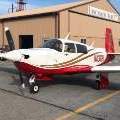
Do you have an angle of attack indicator (poll)
201er replied to 201er's topic in General Mooney Talk
^ Thanks -
So if what you guys are saying is true, that the primary advantages of commercial ops are having multiple pilots onboard, better machinery, and additional people involved, then us private GA guys don't stand a chance of improving the safety record? Obviously we can't be expanding our crew and such. So is the GA safety record doomed to remain as abysmal as it is? Or is there stuff we can learn from what it takes 2 people to do, in order for us to do that on our own?
-
Sorry, mine is in for annual or I might have gone (bad date for me either way though).
-
Do you have an angle of attack indicator (poll)
201er replied to 201er's topic in General Mooney Talk
I think our dentist friend will take more than just a kick in the pants to see the light -
I added wx500 just a few months ago. It helps you distinguish if the picture you see on radar is convective or not.
-
That simply isn't true. All mechanical accounts for 10% of GA fatalities, and vfr into imc accounts for 5%. Based on 2009 stats, of 233 fatal accidents, 24 were mechanical and 12 were vfr into imc. 147 were deemed pilot error. 111 of those fatal accidents involved a stall (60 in the landing phase). In other words 48% of GA fatalities are stall related! (Some of you should think again before criticizing AOA indicators). Based on the same report, if you exclude crop dusting, there are practically no fatal accidents in commercial GA. What are they doing right that we are doing wrong? Why do they tend not to stall but we do? BTW the answer may not have so much to do with hours and ratings cause when ATP and Commercial pilots get behind the wheel of a private GA aircraft, they perform by only a few percent safer than the inexperienced private guy. What's that all about? What's the secret to commercial safety then? Does it really come down to company rules?
-
Do you have an angle of attack indicator (poll)
201er replied to 201er's topic in General Mooney Talk
This is the best justification for HAVING an AOA indicator. Rather than reacting to the stall horn or making all these weight, cg, bank angle, speed assessments (even if you're not sitting there with a calculator it's a lot to think about in a moment's notice), you can simply fly the plane and validate that with the AOA. In my typical pattern, of course I use the ASI. I use the ASI as an approximation of where I want to be. I fly the pitch attitude and validate with the ASI. My typically only reads below 100 knots so I don't reference it till base leg. I fly the speeds till then because they are good enough and leave plenty of margin. But as I begin those pattern turns, I'll glance at the AOA and not the ASI because knowing my speed in the turn is irrelevant. It's the AOA that is critical. Then on final, I mainly look outside and fly the plane, validate this with AOA and make adjustments if necessary, and only ocassionaly glance at the ASI as a cross reference to get a better idea of what speed the AOA puts me for that condition. Can I fly a good pattern without the AOA? Especially with all the data points I've learned having it, absolutely. Can I safely fly the pattern without the AOA or ASI? I'm pretty sure. But if you can justify that an ASI is beneficial to necessary for safely flying the pattern, then it's a good justification for the AOA cause it's actually the right tool for the job. Using the ASI for stall safety and performance climbs is like using a mop to wash carpet. It may work but it's not the right tool for the job. Because the stall horn is only reactive. It only warns you when you've already screwed up. The AOA indicator gives you a visual read out of your angle of attack and helps you learn to fly (in all phases of the pattern) in the optimal configuration. In that steepening base/final turn scenario, the AOA will show you to stop increasing bank angle rather than the stall warning which is only going to give you a moments notice to try to recover. Also the AOA indicator helps you fly the right AOA to maintain 1.3Vso in any configuration, it helps you maintain Vx/Vy for a performance climb. You don't have to take all other variables (weight, cg, flaps, bank angle) into account because the indication is always valid regardless of configuration. -
I recently took a fuel-reimbursement class for PALS and the main point of the class was that there are fewer accidents in commercial aviation and we need to strive to adopt those practices to mission flights. My question to professional pilots who fly 121/135 operations is how do you contend with part 91 operations in your personal Mooney? Do you feel that your professional decision making and safety carries over to your private operations? How and why? What aspects of commercial flying have you brought back to private operations that make you safer? If you could pick only a single safety aspect of commercial flying that can greatly improve GA safety record, what would that be?
-
Do you have a Stormscope or other lightening strike detection device? Did it come with your plane or did you install it? Do you use it?
-
Do you have an angle of attack indicator (poll)
201er replied to 201er's topic in General Mooney Talk
I do. But my plane is going in for annual tomorrow. So, let's try and do that in July. I know everyone wants to see now, but what can I do? It'll make an excuse to revisit this topic again Thanks Jim. I can't take too much credit though cause I didn't fully realize the value of these things until I've had the plane for a bit. I love the Monroy tanks but I don't feel a need to run and tell everyone to get them. But being forced to try an AOA by having one has changed my piloting and understanding substantially! Just having had the experience of seeing what my AOA is in different configurations (not reading about it but actually seeing a measurement) has been eye opening. It has also changed the way I fly the last 1/3 of the traffic pattern. It has helped me perfect my short field landings because I don't get scared to fly slower (when lightweight) and it ensures I fly fast enough when heavy. Before I've had an AOA, I would have probably put myself in the "No, but it's on my extended wish list." But now having flown with one for 3 years (and the lifesaving experiences I've had with it), I feel very differently about it. If I were to change to a different Mooney, it would be the first non-airworthiness thing that I would add without a doubt. I'd trade traffic systems, IPAD, and most of those other non-essential gadgets for an AOA instead. I've really come to value it having seen myself get close to a bad situation that I would never have otherwise known about (like that Cessna 172 story I shared in my other topic). These are the reasons I've been making such a big deal about it and trying to put my own experience flying with one on the line so that others could have this undervalued benefit. -
Do you have an angle of attack indicator (poll)
201er replied to 201er's topic in General Mooney Talk
Given such an averse attitude toward angle of attack indicators and worse yet the invincible attitude coupled with ignorance of aoa all together, it is not surprising the stalls in the pattern are one of the leading causes of death in the GA community. My biggest shock isn't that people are stalling and bending metal, but that there is such a resistance to try and prevent it. Having a reading that tells you realtime margin above stall is extremely valuable. I'm just shocked how anyone could be denying that and feeling so invincible despite all the accident reports (which include very experienced pilots falling into the same trap). An AOA indicator won't solve the problem. But pilots who have the indicator, know how to use it, and understand AOA... now that is a much safer solution by far. To our dentist friend I have a question. Does this mean you refuse to have an xray machine in your practice? Why bother using an information instrument when you can just as well use your eyes? -
Do you have an angle of attack indicator (poll)
201er replied to 201er's topic in General Mooney Talk
If the pilot utilizes information from the AOA to fly the correct angle of attack for every phase in the traffic pattern, I can't picture how there could be poor technique. -
Do you have an angle of attack indicator (poll)
201er replied to 201er's topic in General Mooney Talk
Brett, you're right. I must have grabbed the mph numbers by accident. However, for 60 degrees bank stall is listed at 83 knots (for gear down and half flaps). That would require 108kts to maintain 1.3Vso. Being down to 7 knots of margin and pulling back a little much or a gust of wind can be enough to turn that into a spin. I don't think most of us do a 108kts base to final turn in a tight pattern (heck that's almost max flaps speed). -
Do you have an angle of attack indicator (poll)
201er replied to 201er's topic in General Mooney Talk
I want to make sure I'm over 1.3Vso in the turns. On the straight lines that's easy. But in a 30 degree bank with gear/half flaps, 1.3Vso is over 90knots. Base leg is usually about 90 knots (well above straight/level 1.3Vso) but if you're maintaining that speed through your base to final turn, depending on that bank angle and your weight, you may be dipping below 1.3Vso in the turn without realizing it. That's where the AOA presents you with vital information instantly. -
Do you have an angle of attack indicator (poll)
201er replied to 201er's topic in General Mooney Talk
Out of curiosity, could you share what those speeds are and how you derived them? I know I sound like an AOA salesperson. I really don't have a personal agenda in selling them. But there are 3 things I am passionately sold on from outstanding personal experiences: Mooney, Halo Headset, and Angle of Attack Indicator. Those are 3 things I could not do without so I passionately recommend them to others. I think that if others would try them, they would be as thrilled with them as I am myself. These 3 things really stand out above and beyond anything else based on how valuable they are. Yup, it was totally you Brett. You're scaring all the moonyspacers away -
Sure, you can use my post. It's taken me many years of improvement to come to terms with these issues but I feel responsible and educated enough at this point to make my mistakes public so others may learn from them. Like I previously stated, without the extensive experience I have gained since, I could not have even have begun to understand my original mistakes. Lots of instructors/books "talk" about stalls. But few enough actually make it happen. I hope you can mention that the most disappointing thing I found was in retrospect was that I was only taught 2 stalls and that they are the ones that don't really happen. Straight and level power off and power on. Turning stall were just taught to me as a coordinated turn where you pull back the same way as in the straight and level. They were not bank angle induced so I did not learn that element. I was never taught to fly with varying weights so I was utterly unprepared to go full gross and increase my minimal speed. I'm sure I was "told" that stall speed goes up. But I was never demonstrated or taught to fly a higher airspeed on climb/approach with that added weight. It's too big a jump for an inexperienced pilot to make. The feeling I got from stall instruction was that they wanted to teach me how to stall. Instructors were always encouraging me to stall harder and let them see the stall prior to recovery. This has been the most useless skill I have been taught. I have never once seen the nose drop like that in real near-stall/stall scenarios. Things have always been far more subtle and it was my awareness of the prestall condition and prestall recovery that saved the day. But it's something I discovered on my own since. My instruction may have indirectly prepared me for it, but it could have more directly prepared me for it by not wasting so much time making me do the same pointless straight ahead intentional stalls over and over again. All my instructors were big on stalls. Just not the right ones and not in the right way. That's what I've learned in 8 years of flying.
-
Do you have an angle of attack indicator (poll)
201er replied to 201er's topic in General Mooney Talk
Can't read it in that size. But it doesn't even matter. You're really going to be referring to that and interpolating the data when you are steepening up a turn? It's ridiculous. An AOA indicator takes all the math and guesswork out and simply shows your angle of attack. You don't have to know you weight, bank angle, cg, asi error, or airspeed. It just tells you if you're angle of attack is sufficient or not and which way to correct. You could have been a hair more modest with your paint job and covered the cost of installing an AOA and then some. The AOA is providing far more vital information than the IPAD! Proof is in the stats. See how many accidents due to getting lost, CFIT, flight into weather, mid airs vs how many stalls on takeoff/landing. -
Do you have an angle of attack indicator (poll)
201er replied to 201er's topic in General Mooney Talk
You should keep your turns coordinated period. And there does not need to be a restriction to 30 degree turns if you fly the right angle of attack. I don't know what 1.3Vso in a 27 degree bank is. But my AOA does and all I have to do is ensure it does not dip below that and I'm fine or add some speed if I increase bank to continue to maintain the appropriate angle of attack. Knock yourself out: -
Do you have an angle of attack indicator (poll)
201er replied to 201er's topic in General Mooney Talk
No, no. The AOA serves as the stall warning just the same. I've heard it going off during the stall portions of landings and such so I have a good sense that it is darn close to when the stall actually happens. I just haven't tested it with comparisons to the ASI. I'd like another set of eyes to do that. And when I was talking about the calibration, I was talking about for best angle of climb and such. However, I have found myself getting better VS by following the AOA than the ASI in the initial part of the climb. See my ASI lag response earlier. -
Do you have an angle of attack indicator (poll)
201er replied to 201er's topic in General Mooney Talk
Well you can get in with me and we'll find out. I have no idea how accurate the calibration is. However, from my flying experience I just feel that the AOA indication more closely matches my flight condition than the ASI.