

Barneyw
-
Posts
72 -
Joined
-
Last visited
Content Type
Profiles
Forums
Blogs
Gallery
Downloads
Events
Store
Everything posted by Barneyw
-

Crack in bracket - Main spar fwd gear attach box
Barneyw replied to Barneyw's topic in Vintage Mooneys (pre-J models)
You are correct. It is a formed sheet metal attachment bracket made of 0.070 2024 aluminium which has been heat treated. I apologise for the misleading title. Cheers -
Crack in bracket - Main spar fwd gear attach box
Barneyw replied to Barneyw's topic in Vintage Mooneys (pre-J models)
Hi Jsno I thought about it but there are two issues with that one being taking one off is major job that is to say it's not a screw off (easy to take off) item the other is that most Mooneys as I understand were hand built so the there is a real risk that the holes in the part would not match up with the rivet holes in my aircraft. These things are not easily found and could have been there for years as a smaller crack covered by paint. I think you have to take into account that the aircraft is 60 years old so that's a lot of micro failures. -
Crack in bracket - Main spar fwd gear attach box
Barneyw replied to Barneyw's topic in Vintage Mooneys (pre-J models)
Thanks for the info 1980. I didn't see that second video which has the model in the title. As per my post above I have identified the part and currently in discussions with LASAR and Mooney. Cheers Barney -
Crack in bracket - Main spar fwd gear attach box
Barneyw replied to Barneyw's topic in Vintage Mooneys (pre-J models)
Yep! I guess what aircraft that is 50 years old doesn't have a history of sorts. I have the original logbooks from new when it was first placed on the register here in Australia. It has had a couple of incidents over the years involving wing repairs. I'm sure it has also had its fair share of hard landings. Yes it was a good catch by the mechanic the real question is how long has the crack been there? So I am currently talking to LASAR to source a new Box Assy from Mooney who in turn are trying to find the tooling. I am also exploring the possibility of doing an in situ lamination/glue or some form of doubler repair depending on what we find once we get a better look at it and what access we have. The material is Al 2024 Clad that has been heat treated. Either way it is going to be an interesting exercise. I'll be sure to take plenty of pics of the process and post as things progress. Cheers Barney -
Crack in bracket - Main spar fwd gear attach box
Barneyw replied to Barneyw's topic in Vintage Mooneys (pre-J models)
Thanks Matthew -
Hi All Need some corporate knowledge input as my mechanic is not having any luck with Mooney. skin Aircraft is in for its annual and they have discovered some cracks - the main concern is the crack discovered in the skin/bracket at the gear attach box area. I have attached 3 photos the first two is of my aircraft and the last one is a screenshot of an unknown model with a manual gear for reference only because it looks a little different to mine. The actual crack is above and behind the Truss Assy ref Figure 22 Item 15 in the Parts Catalogue. Anyhow I would appreciate it if someone can enlighten me about the following: a. posible repair b. the differences between the gear attach boxes in the photos. c. is LASAR now the go to authority for all things Mooney. d. any info (structural repair manual diagrams etc) on the area. e. is that all that is holding the truss in position or is there something more structural behind this bracket attaching the gear assy to the spar? Appreciate your help. Cheers Barney


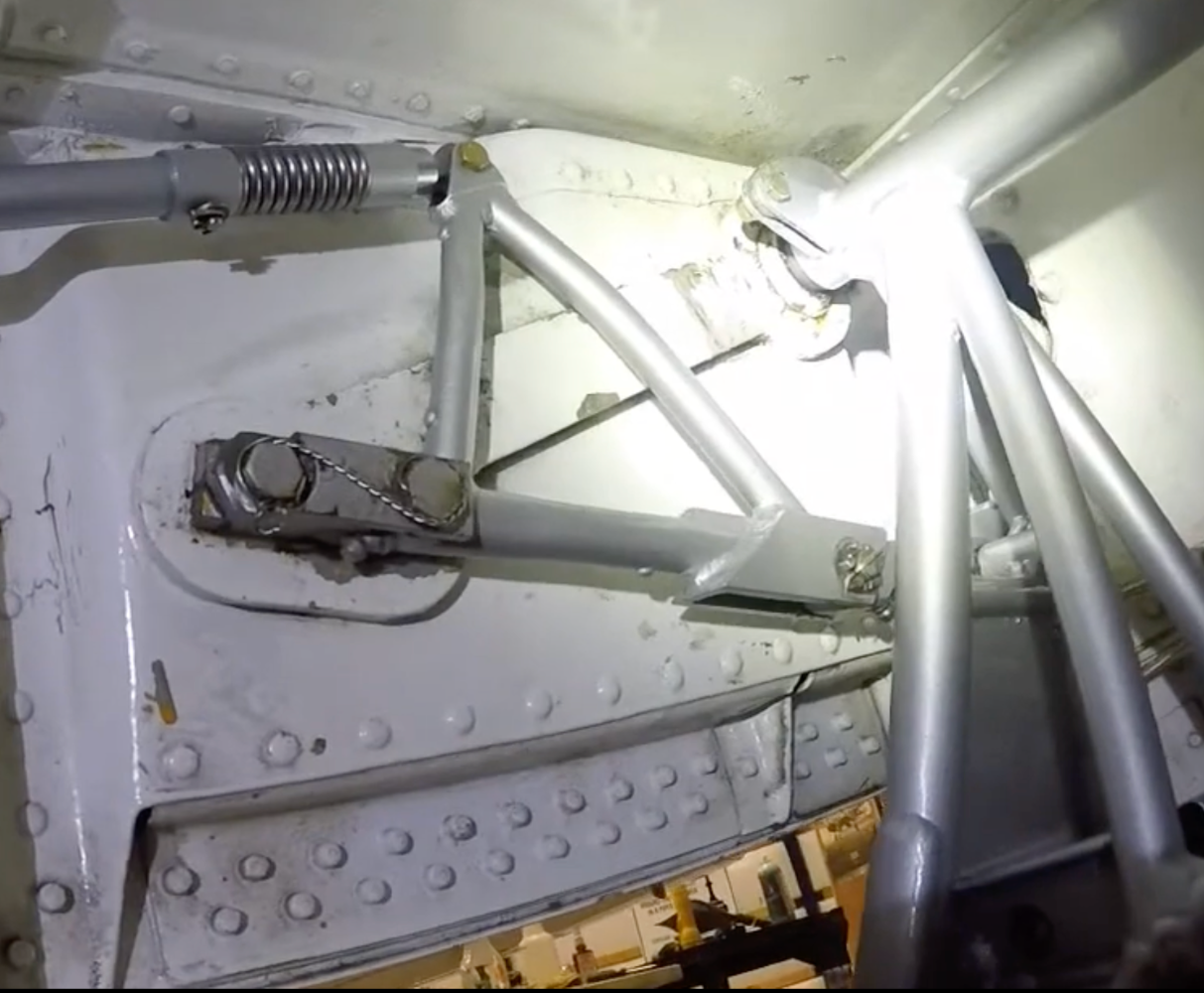
-
Yes the terms seem to be interchangeable but you are correct.
-
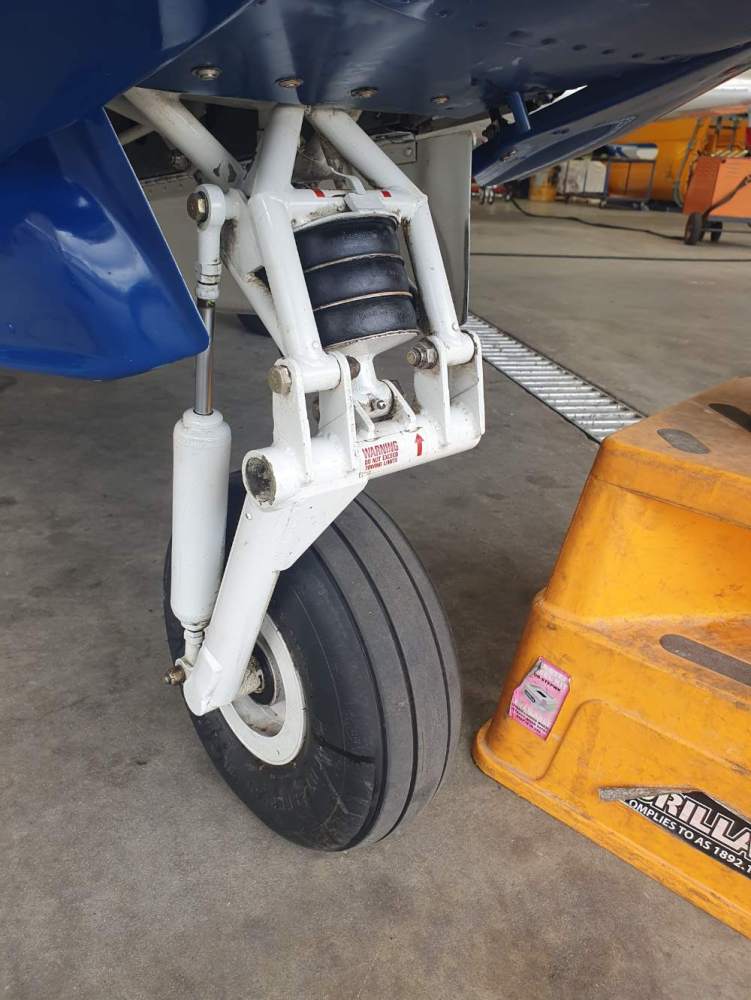
-
Hi all Someone damaged the nose wheel "Leg Assy" by over steering. I think this part is also known as a "Truss" My nose wheel has an extra shock absorber fitted. Anyhow my understanding is that the shock absorber is unique to the "F" and therefore requires a unique "Truss". I just got. off the phone with Lasar and they inform me that they rarely see this type of truss. ATM there is nothing second hand available. Can anyone tell me a little bit of the history of the shock absorber on the "F" and if it is still needed given that Lasar told me the only "early version" of the truss is available without mounting holes. I'm assuming it is not required. Look forward to your replies. Cheers Barney PS I have tried to ring Mooney about this but no answer for now.
-
Retract Gear or Flaps First in a Go Around ?
Barneyw replied to donkaye, MCFI's topic in Modern Mooney Discussion
Always an interesting discussion. I've read most of the posts so may have missed some of the points made. The first point I'd like to to make is that we all should be comfortable in operating the aircraft in all configurations at the worst possible time which means a go around from a baulked landing fully configured at slow speed and at night. We should be always ready for it and know what to do if and when it happens and it will happen. While I agree with bringing the gear up first (I have a "Johnson Bar" which brings its own challenges) I disagree with the absolute statement "gear up, flaps up". I believe more correctly it should be "gear up, flap up in stages" at an appropriate speed and height. I say this for two reasons 1. you should never dump all your flaps on retraction at a critical phase of flight ie low to the ground plus slow and 2. we are talking to pilots with various experience levels so we need to be careful of what we say. For IFR approaches I fly down the slot gear down at 95 - 100KIAS and with my own personal minimas should always be able to configure further when visual. However, if i ever had to fly an approach in anger I would be prepared to land flapless and be comfortable with that. For touch and goes I raise the flaps, then lever down and pump twice = 15º and run the (electric) trim forward for 2 secs. This makes for a comfortable almost in trim aircraft. This is particularly useful for night circuits. There is no doubt that a fully configured GA is a hand full for the uninitiated and for those with manual systems can be quite demanding especially in pitch control. When I first started my IR training in the aircraft my first missed saw me flying the aircraft with one hand and the "Johnson Bar" in the other stuck in a partially retracted position unable to overcome the forces. This happened because the TOGA setting for the FD was set IMO too low which meant the aircraft accelerated rapidly. This has since been rectified. The uptake from all this is know thy aircraft and always be GA/missed minded and treat the landing, or becoming visual, as a bonus. Cheers Barney -
Hey Matthew Not a problem. I sense your frustration. It shouldn't be a fight and you should feel that you are being supported by competent people. If it's any consolation we have a similar problem here. Take care Cheers Barney
-
Thanks Hank Appreciate your reply. While I understand the differences in regulatory jurisdictions I was coming at this form a global perspective. We Mooney owners here in Oz will live or die by the decisions that come out of the US. I was just trying to provide a perspective. Cheers Barney PS I agree with the broader statement that "Aussie regs are not FAA regs ..." But we are in the process of homogenisation of the regs so the regs are looking more similar with every passing year.
-
Thanks Matthew I don't think I'm late at all quite the contrary. I wasn't trying to impose Australian rules or the way our engineers think but this is aviation with a common global interest despite differences in the regs. I was making a suggestion in a broader sense but it seems to me that the bedrock and birth place of aviation appears to be, on the surface, paralysed and dysfunctional. I felt that your reply was a bit of a shutdown for whatever reason. Have a great day Barney
-
Hi All I posted about this last year. Basically if Mooney aren't prepare to support owners in a meaningful way they should get out of the way including the Chinese interest. I know there are complexities involved which have already been noted. I have a similar problem with repair schemes for the "undercarriage link assembly" where a small welding repair is required and Mooney will not provide the metallurgical and hardness data of there parts. The AC 43.13 is not sufficient for this. Despite this I explained this to a well experience engineer here in Australia who simple said it's not a problem. The simple solution was to get the item hardness tested prior to welding, do the welding and heat treat to the same spec. He was prepared to sign off on a scheme that would see the part returned to service. It's not rocket science. My point here is, where there's a will there's a way, and surely with the combined aircraft engineering corporate knowledge in the US you must be able to find an economical solution to the problem. As an aside I don't buy the false equivalent argument that compares cars and aircraft to make a point about expectations. They are mutually exclusive industries. Maybe it's time to become disruptive and start taking matters into your own hands. Maybe it's time, and I am not sure this is possible, to take your aircraft out of the system that is holding you back. So I have some questions How easily can a certified aircraft be reclassified as experimental? If it's easy how hard would it be for a bunch of you guys to form an association or similar that regulates Mooney's outside of the certified regulatory system? How many people know good and experienced engineers and manufacturers that you would happily deal with to provided manufactured parts? I think you can see where I going with this because there is no point banging your head against a brick wall expecting something to change. I'm not sure if this is a viable solution but there needs to be change and direction otherwise these problems will only increase and we will be talking about the same ol' same ol' in five years time. Cheers Barneyw
-
Hi All Does anyone know if there were any modifications or new seats with better backrest adjusters. Are there seats out there with a more progressive adjuster rather than the cam style of adjustment I have that keeps slipping off to a more reclined position. Cheers Barney
-
I guess that's what I want to explore if the increase speed (VLo VLe) was coincidental with the actuator change and a paperwork exercise and if there is any structural difference between the F and the J given, as you alluded to, it all appears to be the same. Not sure where the thread took a turn and starting talking brakes but if there is anyone out there who could answer the questions that would be helpful. Cheers
-
I'd like to extend this conversation further to earlier aircraft in particular aircraft fitted with Johnson bars. Having now done a few gear cycles I can now understand the strain on, most likely, undersized motors - something that is not necessarily limited to the Mooney. What caught my eye was the speed change occurring with what I assume was a more powerful actuator. From what I read in the service bulletin a placard change is all that is required and you are good to go no change to the undercarriage etc. So my question is, is there any structural differences between the undercarriages, and I guess the wing mounting, of the "J" and in my case the "F" I recently purchased 2 x spindle assy, one off a J and the other unsure, but they are the same part numbers and would imagine if I were to dig a little deeper the whole assy would most likely be the same PNo. I think you can see where I am going with this so I would like to know if there is any information or experience on a VLe and VLo for the "F" because at the moment all I have is one speed and that's 105KIAS in a rather light on flight manual and POH. If the answer is in the negative can they please explain why. Cheers Barney
-
True but I am not asking for certification just a point of reference as a guide. Having said that I'm sure that the companies providing such a service are doing so at a high standard.
-
Thanks Scott I get the same comment about the engine all the time. I have the original logbooks and can pinpoint the date it was changed from an A1A to the C1D6. That was back in 1977 so that particular engine has been installed for the better part of 50 years. Other than the one line "Engine change carried out" and the recorded model and serial number I cannot answer the question about how it was approved, probably lost in time. Given what I have read about the A1A I'm happy that it was changed for a different model. In any event from what I can glean from your comments I would need to compare to like model for like model, however, I would have thought that I could just compare, hopefully exercising some common sense here, an IO-360 with other IO-360s irrespective of model as they are essentially the same engines. Surely, within reason, the core of the engine would wear similarly and for the purpose of comparison and serve as good reference. One last comment - the amount of different IO-360 (and O-360s) models out there, and I know they all serve different purposes and applications, seems to me to be a confusing mess. Before I close I am now curious about the engine and the possible STC/approval. I have had limited success at discovering approved STCs from official channels, and we do not do field approvals here in Australia, can someone please direct me to a site where I might be able to discover all the approved STCs for my aircraft or will it be a bit of a wild goose chase given the time that has passed. Cheers Barney
-
Hi All I just completed my first SOAP sample on an IO-360 C1D6. The engine is 518 SMOH, was bulk stripped at 417 hrs due to a leaking through stud and at that point the cam shaft "oil fed lobe" mod was incorporated. The engine is well past its calendar life and is currently running on condition. The report came back clean but as you can appreciate I have nothing to compare it to and even with the next report two points does not make a trend. I did read of one provider keeping a database of all engines and can provide a fleet average so you can compare and benchmark where your engine sits with other operator's engines. AOA out of Phoenix does not have such records. Furthermore, is there a chart that shows what the normal range should be. I have the Lycoming doc but it's quite blurry and that's from the Lycoming website. I'm curious how many of you participate in the SOAP? Does anyone have such a fleet wide record and a chart showing a normal range for the various metals or contaminates. Is anyone willing to share a few of their reports. Look forward to your replies Cheers Barney
-
Thanks
-
Help Me With My Hot Start Technique (or Lack Thereof)
Barneyw replied to bigmo's topic in Vintage Mooneys (pre-J models)
I think there is a good article at Pelican's Perch on this noting that the one hour mark is the critical point. Generally speaking the engine should fire up easily within a hour after shutdown. After an hour it's time to use the fuel pump to purge the fuel lines. But like everything hot engines, it's not always that simple. Lately I have been have good success with cranking the engine and if it fires all good and well but if it fires and then dies I will crank the engine and give it a momentary blip of fuel on the pump while cranking and that has worked every time. Takes a little coordination but quite doable. Cheers -
Hi All Just wondering if someone can shed some light on the Link Assembly part numbers and the possibility of an interchange between models. The part number for the "F" is 520010 - 1. There is a Link Assembly for sale from a "K" and its part number 520010 - 001 Are these parts the same or does the 001 mean it is different, albeit slightly, or was this just a newly allocated part number? Thanks in advance Cheers Barney
-
I have a maintenance background albeit a military one but even then it was all about more speed and less haste, measure twice cut once and get the job done right the first time. This smacks of carelessness, pressure from above and lack of training. I presume in their haste to get the job finished and clear hangar space that all the snags you found were fixed on their dime not yours - something to do with false economies etc. Having said that I think their is a general malaise in the system on a global scale more kids interested in becoming influencers or Tour of Duty champions rather than getting a real job. I would imagine, just like here in Oz, the average age of an experienced mechanic is increasing at an alarming rate. Cheers
-
I didn't think air rage - GA style - was such a thing. Yes the Mooney may have made a bit of an error but the controller was totally unprofessional, the guy behind probably benefited from doing a rare go around but was obviously not concentrating on flying the aircraft making an angry comment and the clown who chimed in with the "they give licences to anyone" remark was totally unnecessary If this is the reaction from all involved when something minor like this happens it begs the question what will the reaction be like when something serious happens. ATC are there to serve and manage the airspace, I don't think "get off the runway" is standard phraseology. All in all the pathways for something more sinister to happen were being nudge closer and closer by the reaction of the pilots and controller ganging up on one person who should have known the rules but hey hands up those of you who have gone through your aviation life without a mistake or error - if you have your hand up then I would say you are being somewhat economic with the truth. Cheers Barneyw