

oisiaa
-
Posts
72 -
Joined
-
Last visited
Content Type
Profiles
Forums
Blogs
Gallery
Downloads
Events
Store
Everything posted by oisiaa
-
The problem I have with these carb icing charts is that they are so broad that it makes it seem like you're going to fall out of the sky without full carb heat unless you're flying mid-day in the desert.
-
Any tips, tricks, or things to watch out for when flying IMC with a carbureted O-360? I don't have a carb temp gauge so it's all or nothing with the carb heat. Should I be running carb heat at anything other than wide open throttle? Can I expect carb ice even at WOT regardless of OAT (100% RH afterall in cloud)? Avoid IMC all together until I get a carb temp gauge? I understand the O-360 to be somewhat less susceptible to carb ice than other engines, but that isn't something I want to count on. Just looking for inputs on realistically what to expect from experienced carb owners.
-
Absolutely not. It would overheat and the battery would be drained on either the first tire or part way through the second. It's made for bicycles, but due to the small air volume and low pressure of our Mooney tires it works very well to add 5-10psi on cold mornings. It's an excellent and lightweight compressor, but not for cars. In a pinch it would work if you suddenly have a low tire, but not a primary solution. The battery could probably go 0-30psi on all 3 Mooney tires on a single charge, but that would be the limit. For reference I gain about 0.5psi per second on my 29" mountain bike tires.
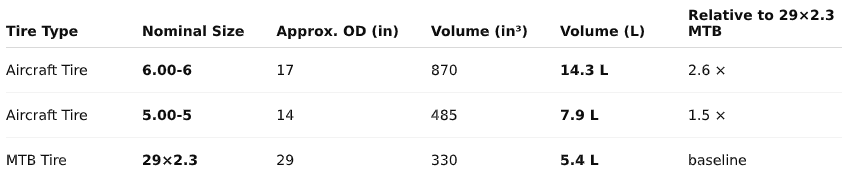
-
I haven't gone from flat, but based on what I've seen it should do it no trouble in probably about 60-90 seconds.
-
My thoughts too. It's a minor pain to take them off to check the pressure. I'm not worried about drag with the wheels down so aerodynamics plays no part.
-
BTW, thoughts on hub caps? Is there any benefit to having them on?
-
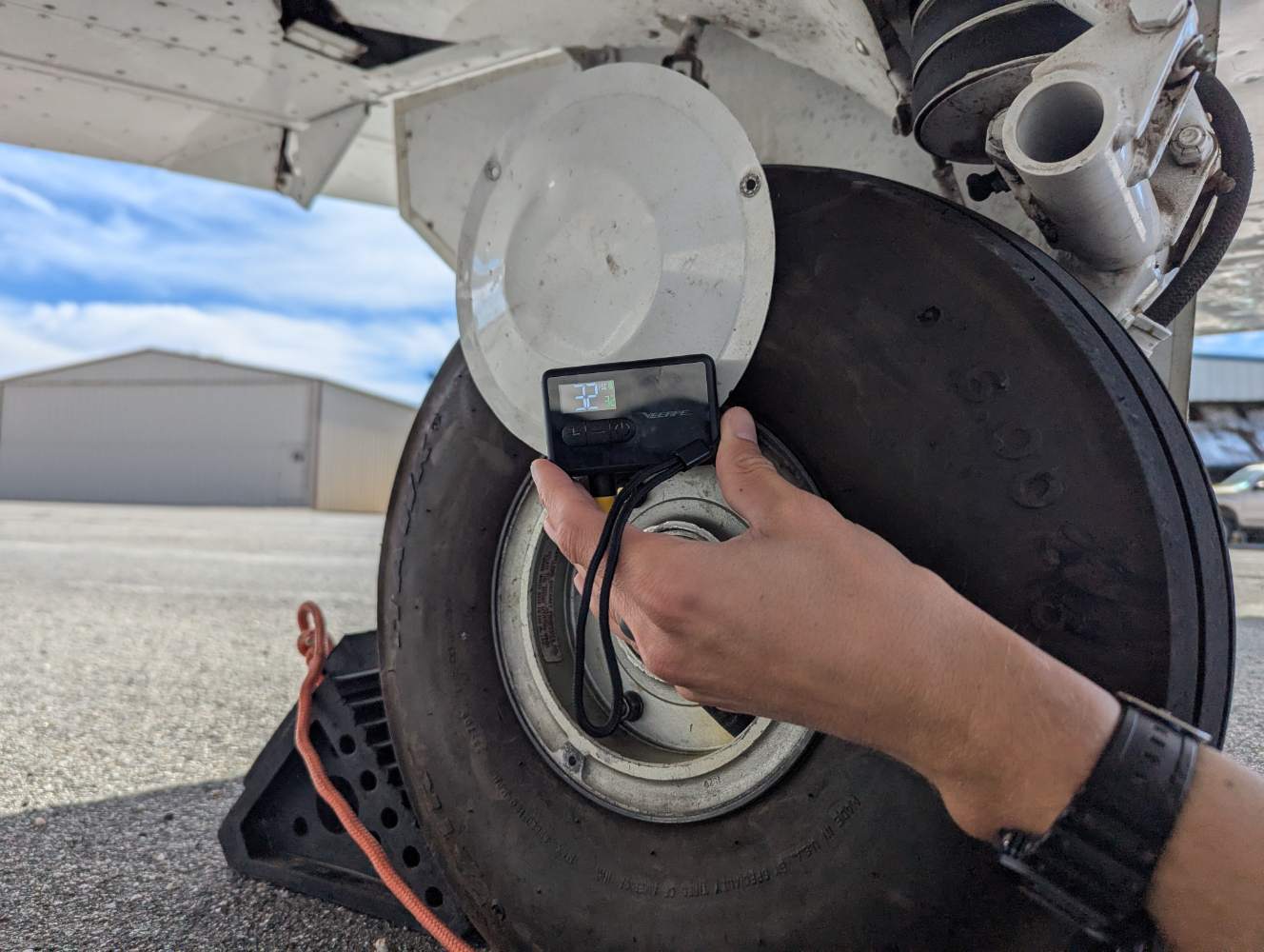
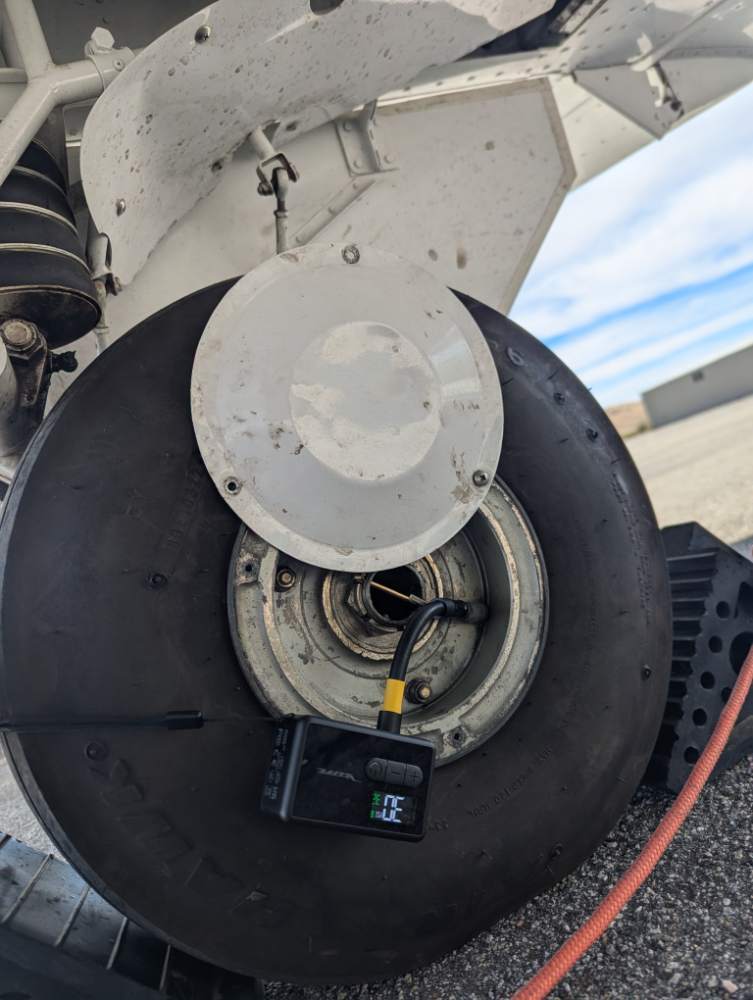
I bought this for my mountain bike and only after I received it did I realize how absolutely perfect it is for the plane. Super compact and lightweight. The battery is plenty to top off tires many times while on the road away from your hangar. This is a 10/10 product for on-the-go tire pressure maintenance. For reference, it's almost exactly the size and weight of a GoPro camera. Just dial in the desired PSI and it will automatically shut off at that pressure. The small size and low pressure of our tires means that even going from a very low 20 psi up to 30 only takes about 30 seconds. Highly recommended: https://www.amazon.com/dp/B0D9BPMYYR?ref=ppx_yo2ov_dt_b_fed_asin_title&th=1
-
Exactly, turn key. Modern avionics. Low time engine. Speed mods. When you really look at comps, I think it supports the price nicely. An M20E in similar condition should support this price too. I'm really curiuous what the new MOSAIC rules will do the value of the whole GA fleet. More people competing for the same limited fleet of aircraft will likely inflate prices up the whole chain.
-
Maybe I'm a sucker, but I paid $155k for a loaded M20C (speed mods, leather, full LED, electric gear/flaps, etc.) with a 120 hour engine/prop. G3X, G5, GTN355/GTX375, GFC 500, etc. I've questioned this pricing since purchase, but going on Trade-A-Plane and looking at J-models in the same price range I continue to be happy with my purchase price. I'm giving up maybe 10 knots on a J (my C will do ~146-148 KTAS), but to get equivalent equipment and engine life you're $200k+ for a J. I believe my plane might be the most expensive M20C ever sold...and I think I'm okay with that based on the market.
-
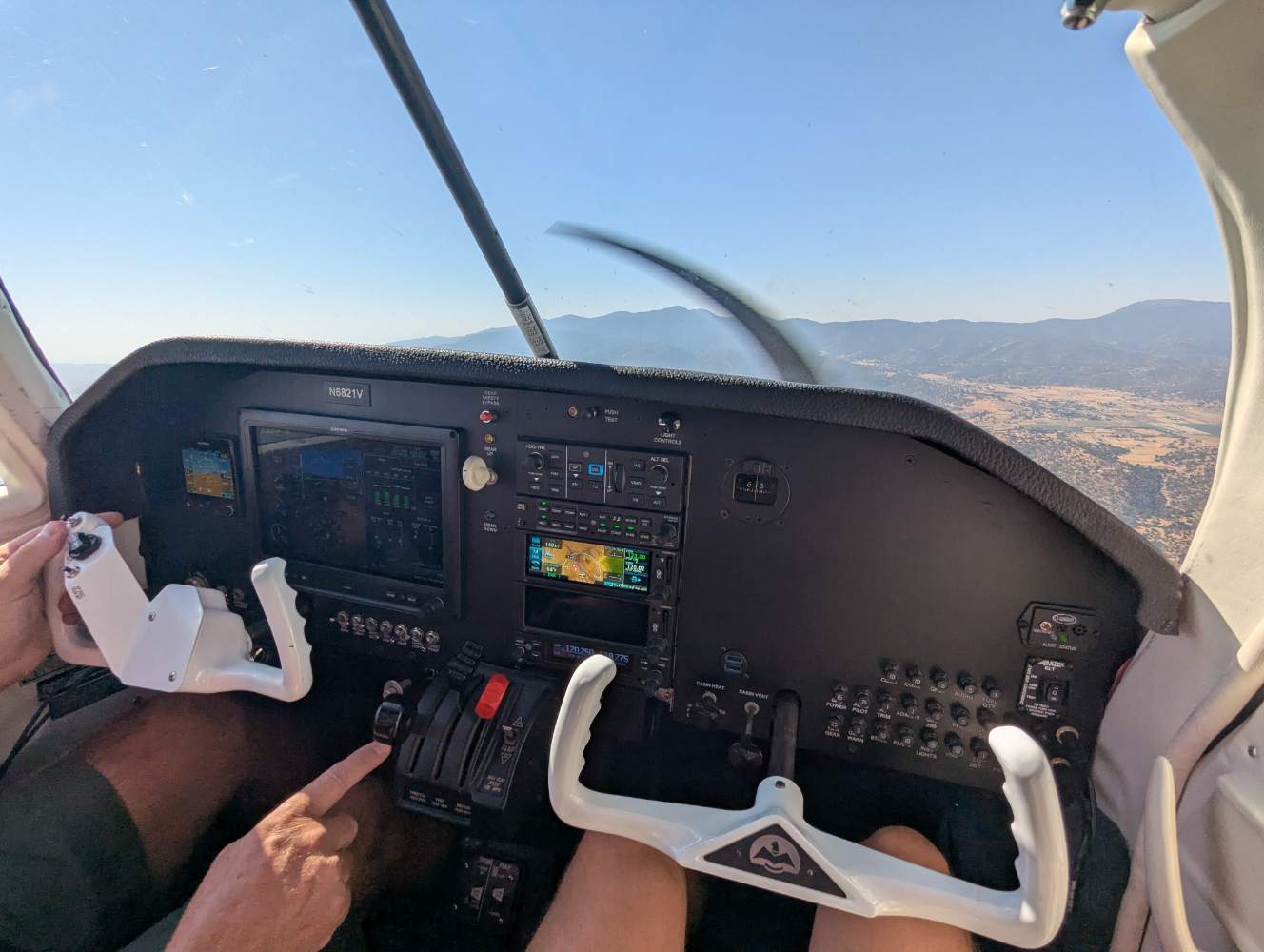
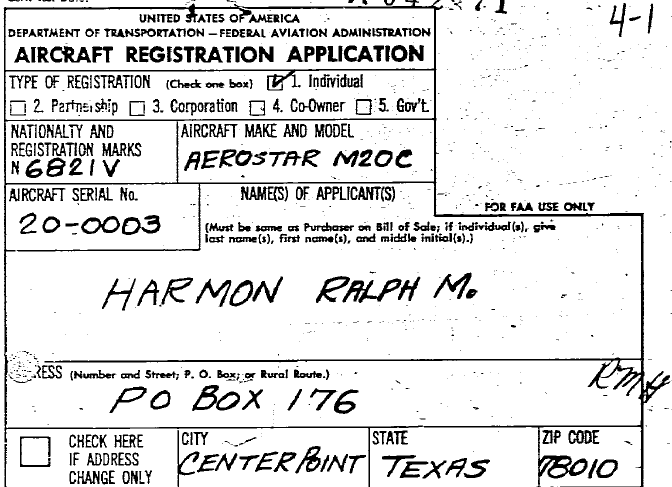
My M20C N6821V was personally owned by Ralph Harmon from new in 1971 for about 12 years. He was the chief engineer of Mooney for over a decade including when my (ours/his) plane was built. I didn't know that Mr. Harmon was such a legendary figure who designed the V tail Bonanza.
-
The whole engine mount was replaced back in 1979 to comply. I personally saw the gussets this past weekend during an oil change. Interestingly, my tail was owned by the Mooney chief engineer at the time (I forget his name without looking in the records) so it received top treatment.
-
Hmm, the motor mounts were just replaced in the past 2 years (before I owned it). That, coupled with a log entry of a dynamic balance makes me think the previous owner had similar vibration issues.
-
How long from start up to take off? (Normally aspirated)
oisiaa replied to NotarPilot's topic in General Mooney Talk
Page 4-5: Seems to take roughly 10 minutes when below 50F for me. That's considerable ground time, but worthwhile if needed to prevent engine wear.
-
I found a used 1CH1-6 down limit switch for $75 from BAS vs the near $1,200 that LASAR wants for a new one (plus an 8 week lead time)...I'm going to take my chances for such a price difference.
-
How long from start up to take off? (Normally aspirated)
oisiaa replied to NotarPilot's topic in General Mooney Talk
I'm also operating under the 1970 C Model POH (POH 1203) and have been following 100F as minimum before takeoff based on this same 100-225F range for continuous operation. Seems pretty clear cut for us and can probably inform the discussion for other similar engines (O-360-A1D). 100F takes about 10 minutes on the ground when running 1000-1200 RPM for me with the ambient around 40F. -
Will this switch sticking prevent extension? I have a 1971 C model that has an issue with the gear not coming down. The shop cleaned the switch last month, but this morning the gear didn't come down again so I'm looking to have the switch replaced. Just sanity checking that the switch sticking will prevent extension before I spend the money on a new switch. My gear eventually came down after maybe 10 minutes with the gear switch in the down position as I was setting up to manually extend the gear. Edit: Just thinking though this, it makes sense to me that if the switch says that the gear is down, then power to the motor would be removed. I'll check the service manuals when I get home for schematics.
-
Thanks, I'll try a mag check next flight. It's a two bade prop. I'm typically running 2400 or 2500 rpm which (I'd hope) would be well away from any limits unless the tach is horrendously inaccurate. Already have a smooth landing light lens. The mounts isolators are almost brand new and I'm fairly sure the whole engine mount was replaced back in the 1970s per the logs....even though the last annual did the engine mount inspection AD (past owner). The dynamic rebalance might be the COA even though it was recently done (perhaps improperly).
-
I just bought a 1971 M20C and it's been great so far across my first 6 hours and I'm still learning the quirks. At cruise speed it seems like there is normally a vibration. I don't think it's a misfiring cylinder since I'm getting good power (~144-146 KTAS). It seems like it might be a propeller harmonic or the prop is out of balance. I've tried adjusting the prop RPM up and down in 10 RPM increments which I'd expect to help if it's a harmonic, but that doesn't really seem to fix it. I also don't notice it 100% of the time so sometimes it runs totally smooth. I tried cracking the throttle until I saw a .1" decrease and then playing with the mixture up/down slightly but that didn't seem to fix it either. That leaves me with the opinion that the prop itself might be slightly out of balance. I'll have to look in the logs, but I'm pretty sure it was just balanced not much more than 100 hours ago. Any thoughts?
-
Thanks all!
-
What's the idea with partial carb heat? 148 KTAS is great!
-
Also, can I trust the % power readout of the G3X? Is that reliable and accurate just based mathematically on MAP and RPM? If that number can be trusted then I can at least know at a glance when I'm below 75% power.
-
Any recommendations on a comprehensive guide (written or video) on leaning? I recently bought an M20C. I'm an Air Force guy and 99.7% of my hours are in jets or turboprops so the red knob is a bit of a mystery despite reading the POH and other basic guides. It seems almost like an engine self destruct lever if used improperly. The POH essentially says full rich when >75% power unless you have an EGT gauge (I do via G3X), but then doesn't say what to do if you do have an EGT gauge. Ideally, I'd like to be able to fly at WOT at altitudes where >75% power can be achieved without burning crazy amounts of fuel at full rich. The lean assist mode of the G3X requires you to find peak EGT which I understand to be the point where detonation is the most likely so at >75% power I don't really think that can be used safely. My home field is 4,000' so I have questions about leaning for takeoff and climb. Thanks for any pointers to good guides or discussions in this thread!
-
1971 M20C - Electric Gear Failed to Lower
oisiaa replied to oisiaa's topic in Vintage Mooneys (pre-J models)
I got the plane back today. The issue was a sticky downlock switch. Apparently this will cause the gear to not extend if it is stuck in the ground position. -
Garmin Yaw Damper - Weight & CG Implications
oisiaa replied to oisiaa's topic in Vintage Mooneys (pre-J models)
The previous owners were chasing speed. It isn't a huge problem, but a lightweight battery would help with not having to think about CG too much. -
Garmin Yaw Damper - Weight & CG Implications
oisiaa replied to oisiaa's topic in Vintage Mooneys (pre-J models)
My wife is easily motion sick.