
FloridaMan
-
Posts
2,197 -
Joined
-
Last visited
-
Days Won
4
Content Type
Profiles
Forums
Blogs
Gallery
Downloads
Events
Store
Everything posted by FloridaMan
-
 I went with Aero Engines of Winchester for my overhaul because of Lycoming’s lead times. Added bonus was they used parts from superior so I wasn’t subject to the required teardown that all Lycoming factory overhauls from that time needed due to the potential that rod bushings were out of spec. I had all of my wiring for the alternator and power replaced when they did my engine. Those wires fail from vibration more often than alternators fail and can cause you to have an AOG situation (happened 3x to me before replacing them and to many other MS members). No need to overhaul your prop and governor, just have them IRAN it. Make sure your governor bracket is included and let the prop shop install it so your IA doesnt damage the seal.
 -
Red bull air race series cancelled
FloridaMan replied to bonal's topic in Miscellaneous Aviation Talk
Paging @cujet to the white phone. -
PNW / NorCal Paint Shop Recommendations Requested
FloridaMan replied to Aviationinfo's topic in General Mooney Talk
-
PNW / NorCal Paint Shop Recommendations Requested
FloridaMan replied to Aviationinfo's topic in General Mooney Talk
Whatever you do, get her painted in Imron. My '67F was painted in Imron paint in 1994. (on the left. photo was last month. I have other photos, but I don't feel like digging around to post a fucking picture. It looks new)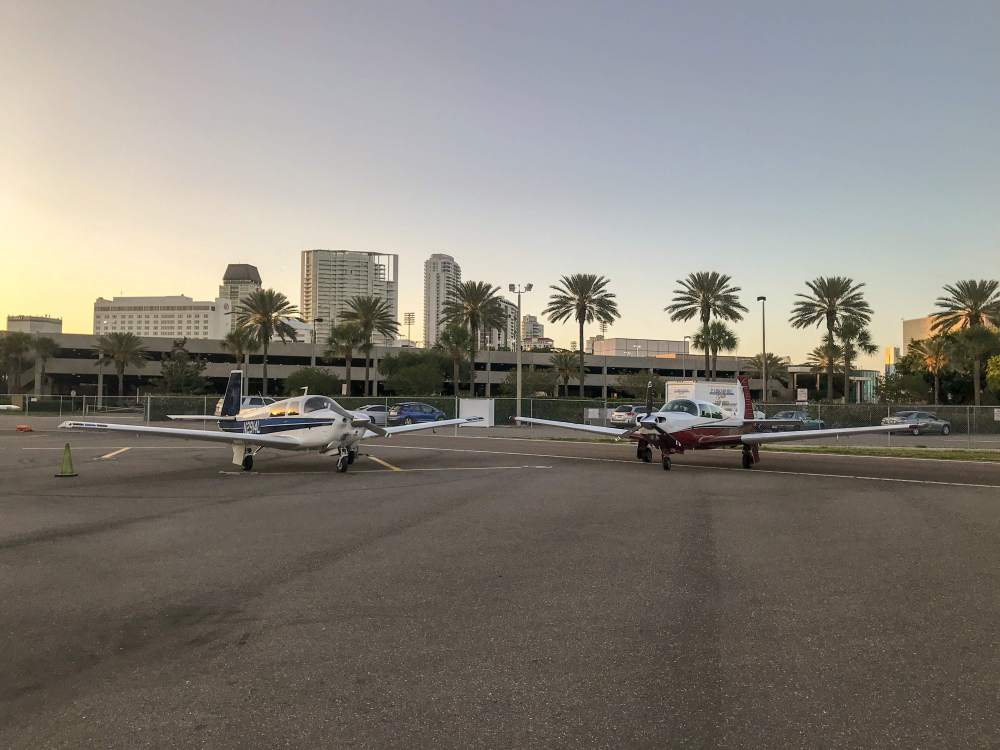
-
One of my biggest fears. Did all of this develop since the previous annual? Did you ever get it treated previously? I get both my Mooneys fogged with one of the LPS variants every two years.
-
I've wondered how far out one must get before being unable to "catch" the stall. I think it was @jetdriven who used an example of the possibility that a pilot set on returning could be banked at 45 degrees and 20 degrees pitch down with the stall horn blaring while trying to turn back. I imagine that a stall in that attitude at 300ft AGL would end in disaster, regardless of who's at the controls. I've gone up with an acrobatics instructor who had thousands of hours of Mooney time and done aggressive stalls at 4000ft in my M20F. You can be at full power, bleed off airspeed, hold the yoke in your lap and keep the wing stalled and keep the plane right-side up with the rudder (full power stalls require almost full right rudder just before the break). It is violent, requiring significant rudder correction and the airplane's response lags and overshoots, but it does not roll over. Aggressive accelerated stalls ended up with me being immediately wings level. I don't know if it's the flight characteristics of the airplane or if I was so terrified of ending up inverted that I reacted so quickly with top rudder as to recover wings level. If having to turn to make a target with an engine out, I've done the thought experiment that I should use top rudder to correct for centerline alignment if base-final needs to be aggressive. It makes sense to slip to align and track with the centerline of the runway, level the wings and track straight with the rudder once wings are level. If you're being pushed away from the centerline in a manner that requires a tighter turn, the temptation is to not overbank and to tighten the turn with the bottom rudder (skidding turn) since that will align you with the centerline, but only briefly, as your plane continues on its path. Continued input means more rudder and more bank, shadowing the bottom wing even more. If that bottom wing stalls, the forward CG of the normal category airplane and the stalled bottom wing means that the nose drops, the non-stalled "top" wing gains speed and lift, rolls the plane and creates a smoking hole in the ground. A side slip (top rudder) to correct centerline displacement allows for change in offset with no change in bank. If the pilot screws up and stalls with a little top rudder, provided there's not enough input to enter a snap roll, the bottom wing remains flying while the top wing drops through level and you have more time to prevent the spin with the rudder. Or, to put it another way: stall the bottom wing (skid with bottom rudder) with 60 degrees of bank and you're inverted after rolling only 30 degrees, stall the top wing (stall in a slip with top rudder) and you've got 150 degrees of roll for recovery before you end up inverted. I haven't tested the above theory, and hope to never have to, but it's something I've thought about.
-
52D54 DIrectional gyro - has it lighting?
FloridaMan replied to NicoN's topic in Modern Mooney Discussion
There’s another member here who sent an instrument off for a light repair and ended up dilated from the process. -
I can’t quite say for sure. It seems that sometimes I’ve flown at lower altitudes screwing around for 3-4 hours and needed a quart and others after a 5 hour cross country it looks like it hasn’t used any at all. It seems like that there are certain types of flying that are more likely to blow oil out from somewhere than others.
-
I’ll also mention that the FAA/FSDO was calling me repeatedly within minutes of landing in that field. Everyone here should carry AOPA extended legal protection as, while there was no warning of imminent failure and all of my documentation was current and correct, it was nice to have them to advise me.
-
I visited the crash site where a member here had an engine failure leaving EastHampton and landed in the birch forest that surrounded the field. They escaped prior to the post impact fire that destroyed the plane, but they made it out. There was an M20J that resulted in two fatalities in (I think) Texas. It may the the airplane that’s involved in a current lawsuit blaming magnetos even though NTSB reported finding significant amounts of water in the fuel lines and fuel servo. Witnesses reported the pilot made a hasty start and departure, takes off and the engine sputtered. He had plenty of runway remaining. He lowered the nose and the engine regained power. He then started to climb and the engine lost power, so he stall spins it trying to make it back. If you lose power and there is a suitable place to land (and nowhere else if you overshoot), make sure the power doesn’t come back and land it there.
-
To continue my thought, my answer is gear down, but try to get the mains to dig in first. If there’s something bad enough to hold a wheel, it’s also bad enough to grab a prop blade or spinner and I visualize a fast sliding plane hulk smashing itself, pivoting on the nose, putting tremendous force on the motor mount and flipping inverted lengthwise.
-
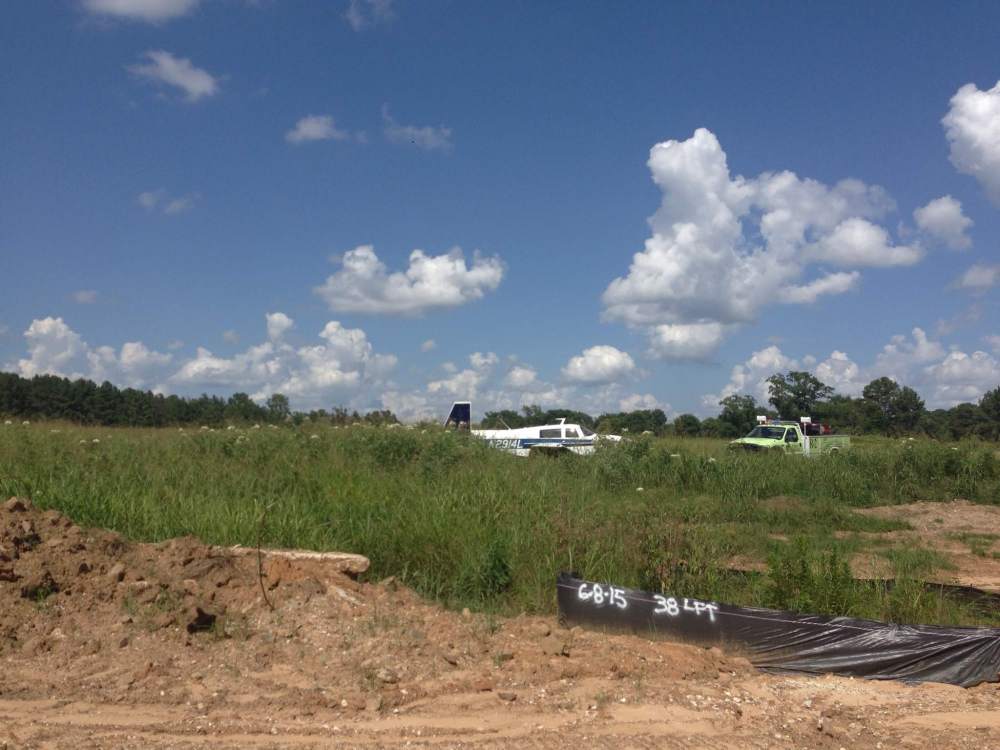
I have not done power off 180s in the Rocket yet. It’s something I need to practice along with going up to altitude and testing elevator authority at different trim settings and speeds. The a major variable with the rocket (and a difference between ours) is the full feathering prop. I don’t know if it’s a good idea to feather it in the air outside of an actual emergency, and even then, there exists the chance of recovering the engine and then being unable to get the prop to unfeather. When I had my failure in my m20f, my issue wasn’t making it to the field, it was slowing down to get there. The sight picture at the time of my realization was that I could see the end of the 10,000ft runway and the 1,000ft marks were about in the middle, so I was at 130mph at 200ft and had 2,000ft of runway underneath me. I stood on the rudder, pulled back on the yoke, loaded the wing as much as I could and dumped in full flaps; my passenger made a hand gesture towards the gear handle. I thought “good idea” (for adding drag). In my practice with my m20f I noted that getting below 100mph before a slip would shorten my glide distance. I’ll say that in spite of that, she kept wanting to pick up speed. As I got just over the field I was back up to around 100mph. I thought “fuck it” and forced it down. It bounced and lost a lot of speed. After a couple more bounces, I’m rolling fast and the field dropped out from under me. It was a steep downsloping runoff field that, when not covered in 4ft weeds, has the appearance of a dry delta with all the little eroded channels in it. As I continued rolling quickly through the weeds I for a brief instant had the sobering thought regarding my own life: “shit. Is this all there is?” I also remembered being ready to dig in a wing and ground loop the airplane if necessary as the end of the field and neighborhood approached. The plane felt like it had settled on its mains so I applied the brakes and came to a stop. I had 805 hours total and 600 hours in the Mooney when that happened. While I dropped the gear to slow down, the gear ended up buffering my touch down, protecting the airplane and control surfaces, and allowing me to maintain control authority after touching down. If making it was an issue, I would keep the gear up until I was certain I had the field made and then throw in all the drag at once. I was trained to imagine the center of the runway as my target, not the threshold, and to make adjustments on short final.
-
Guy killed himself leaving Brooksville or Ocala in a Bravo a couple years back. His fiancé survived. He was turning back and tried to drop the gear in the turn and stalled it. Had he not tried to turn around he could’ve gone just about any direction and landed in a field. Mooneys do great landing in fields and nobody should be intimidated at the prospect. Remember, when the engine stops making power, the plane no longer belongs to you; it belongs to the insurance company.
-
We have a legal system in this country, not a justice system.
-
What I have learned about LED landing lights
FloridaMan replied to PTK's topic in General Mooney Talk
I have a Whalen par46 in my m20f and 2x teledyne par36s in my rocket. The teledynes are far, far brighter -
With the exception of the ride in IMC or turbulence, or for trips over 300nm, the M20F is a much more enjoyable airplane to fly than the Rocket. It got me thinking... I've never flown a short Mooney. Anybody with experience in both the short and mid-body Mooneys have some experiences to share?
-
You can also pull back on the yoke, drop a wing and stand on the top rudder. You don't want to do this unless you've got a ton of speed to bleed off in a short distance -- as in, you've got to make that field you're landing in because going around is not an option.
-
My rocket’s oil consumption is also pretty low. A lot lower than any lycoming I’ve flown.
-
My 231 does way more than 166kts at 8500
-
I thought this was gonna be an Uzi thread
-
Reduced manifold pressure in rocket
FloridaMan replied to FloridaMan's topic in Modern Mooney Discussion
-
On the rocket, we had to chase down an indication issue. They worked fine outside of the tank and would fail as soon as installed. The connection between the two sending units was spliced together and making a poor connection.
-
Reduced manifold pressure in rocket
FloridaMan replied to FloridaMan's topic in Modern Mooney Discussion
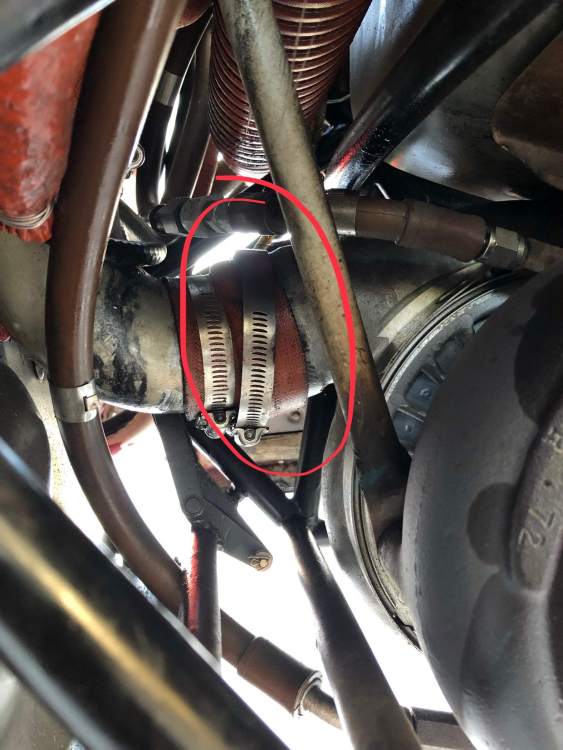
Another thing that happened was I had forgotten to get my pair of keys from my IA and was using the ignition key on my heavy keychain. In the climb, turbulence switch me to one mag. I felt a hiccup and then noticed the rising TIT and rectified it before it went into the red -- first by increasing richness to cool TIT, then backing off on power, noting that the CHTs were down around 300 and then noticed I was on one mag. That's when I first noticed the loss in MP. The engine and turbo have less than around 350 hours SFRM. On the trip up, the plane performed without issue so this was a sudden onset. One other thing is that oil consumption appears to be up a bit on the plane with a quart every 5 hours. On a Lycoming, that would not be a concern, but this is an increase in consumption for this engine. I do run aggressive power settings in climb and cruise at 2400/32". All other instruments were completely normal in cruise as if I'm using standard power settings. Descending resulted in increasing manifold pressure like an NA airplane. -
Was climbing out yesterday and lost manifold pressure in the climb and amended altitude to 160. It wasn't a sudden or catastrophic loss, I just couldn't maintain 35" so I cruised at 2300/29". If I pushed the throttle forward I could get 33", but I wanted to leave some headroom as I believed I was dealing with an intake leak and was concerned my turbo might be running at excessively high RPM. At 10,000ft, I was able to get a full 38" of MP. Previously, I might start seeing a drop from 38" to around 37" at over 20,000 and could get close at 24,000ft. I could maintain a 35/25 climb to 240, but fuel pressure would drop off and I'd have to use the low boost for assist. I haven't tried going that high since getting my engine monitor installed.
-
Would you want a turn and bank with a Castleberry?
FloridaMan replied to Lance Link's topic in Miscellaneous Aviation Talk
If I were IFR and have lost my primary attitude indicator, I would declare an emergency. In most places where I fly I would expect priority treatment from controllers and would think I’d get vectored for a straight in approach if I absolutely could not fly a visual approach. Flying into locations that require significant terrain navigation and avoidance on approach fall outside of my personal IFR minimums. AVL May be ok for an approach. ASE, no way.